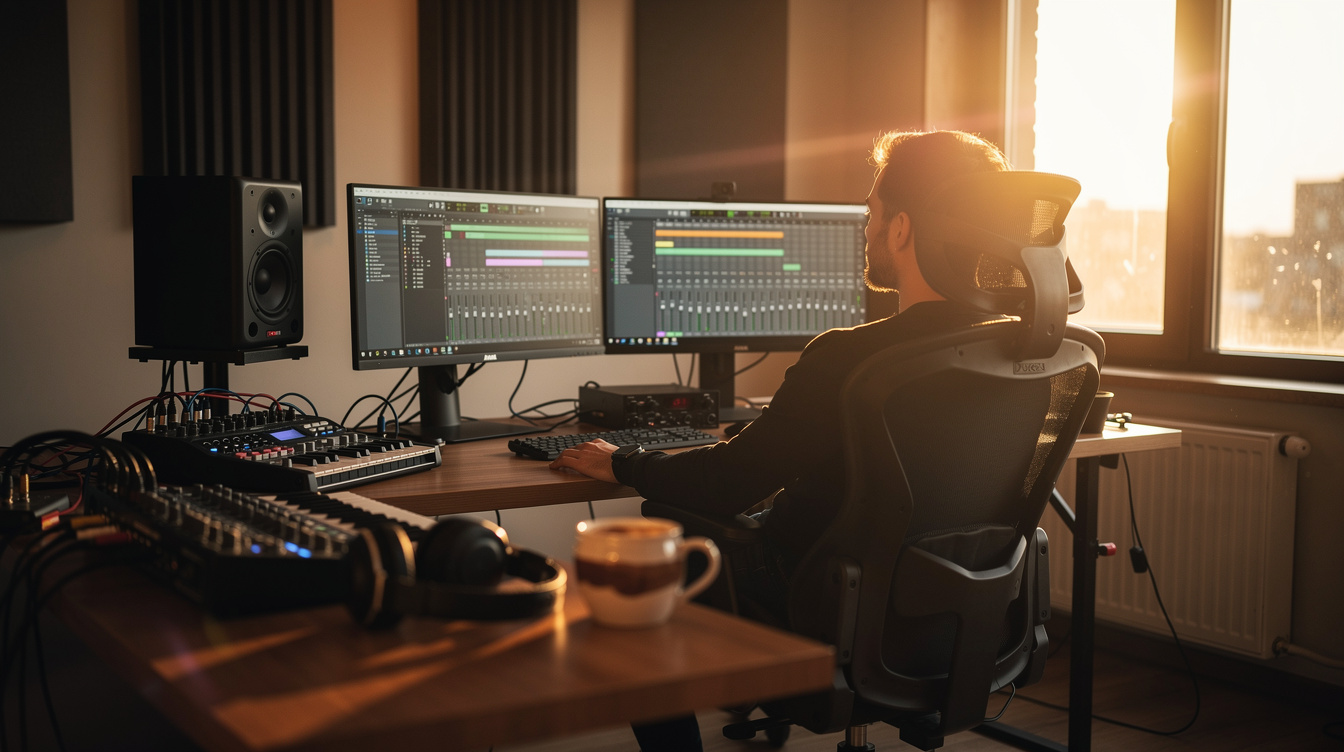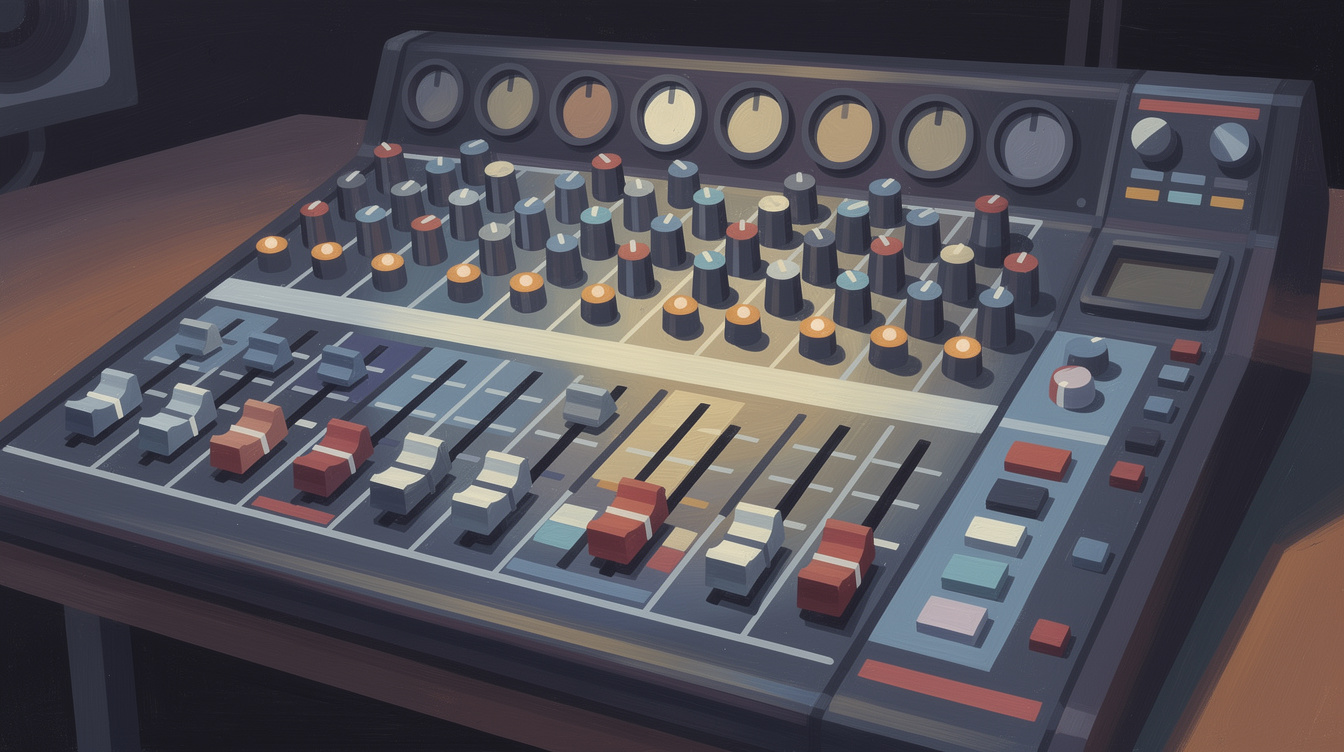
Mixing is the art of making all your individual tracks sound good together — balanced, clear, and three-dimensional. It used to require a huge mixing console and a treated room. Today it happens entirely "in the box" — inside your DAW, with software. This lesson is the modern mixing mindset and the small set of tools that do almost all of the work.
We've got dedicated deep-dives on each tool (EQ, compression, gain staging). This lesson is the framework that ties them together.
What mixing is actually trying to do
Strip away the jargon and mixing has three goals:
- Balance — every element at the right volume relative to the others. Can you hear the vocal? Is the kick too loud? Is the hi-hat stabbing your ears?
- Clarity — each element has its own space so nothing masks anything else. The bass and kick don't fight; the vocal sits on top of the instrumental, not buried in it.
- Depth & width — a sense of three dimensions: some things up front, some behind; some left, some right; not everything stacked dead-center and flat.
That's it. Every tool below serves one of those three goals. If you're ever lost in a mix, ask: which of these three am I trying to fix right now?
The tools, in the order you should reach for them
Beginners reach for fancy plugins first. Pros fix the cheap things first. Here's the priority order:
1. Volume (the most important tool, and it's free). Most mix problems are just balance problems. Before any plugin, get your faders right: pull everything down, then build the balance from the most important element (usually vocal or the main hook) outward. Set clean levels first — a huge share of "my mix sounds bad" is solved here, with no plugins at all.
2. Panning (free, and instantly creates width). Spread elements across the stereo field. Keep the foundational stuff centered — kick, bass, lead vocal, snare — and pan the supporting elements (hats, percussion, doubled guitars, backing vocals) left and right. A mix where everything is center sounds cramped; a little panning opens it up immediately.
3. EQ (carve out space). EQ boosts or cuts specific frequencies. Its biggest job in a modern mix isn't making things "brighter." It's carving space so elements stop masking each other. Cut a little of the frequency where the bass and kick collide; high-pass the rumble out of non-bass tracks; dip the instrumental where the vocal lives. Subtractive EQ (cutting, not boosting) is the cleaner habit.
4. Compression (control dynamics, add punch). Compression evens out the loud and quiet parts so a track sits consistently in the mix, and can add punch and glue. Reach for it after volume, panning, and EQ — it behaves predictably only when fed clean, balanced levels.
5. Reverb & delay (create depth). These are your depth tools. Reverb places sounds in a space — a little pushes an element "back," a dry sound stays "up front." Delay (echo) adds dimension and rhythmic interest. The classic mistake is too much — drowning everything in reverb pushes the whole mix far away and muddy. Use it to create contrast: dry, present elements against wetter, distant ones.
The modern mixing mindset
A few principles that separate clean modern mixes from muddy ones:
- Less is more. Every plugin you add is a chance to make things worse. The best move is often removing an element, not processing it. A muddy mix usually has too much going on, not too little.
- Mix at low volume. If your balance sounds right quiet, it'll sound right loud. Loud volumes flatter everything and hide problems.
- Take breaks. Your ears fatigue and adapt within minutes. Step away, come back fresh, and problems jump out. (Next lesson's reference-track technique is the cure for ear fatigue.)
- Mix into a vision. Don't process aimlessly — decide what the song should feel like (intimate? massive? lo-fi?) and make moves that serve that feeling.
You don't need much
Modern DAWs ship with capable stock EQ, compressors, and reverbs — enough to make a release-ready mix. The endless plugin-buying that consumes beginners is mostly avoidance. The tools above, used well, get you 90% of the way. Pros make great mixes with stock plugins all the time; the skill is in the decisions, not the gear.
What you actually need to remember
| Tool | Goal it serves | Reach for it… |
|---|---|---|
| Volume | Balance | First, always |
| Panning | Width | Second — free dimension |
| EQ | Clarity (carve space) | Third — cut more than boost |
| Compression | Control + punch | After levels are clean |
| Reverb/delay | Depth | Last — and sparingly |
Mixing is a craft you'll refine forever, but the framework is simple: balance, clarity, depth — fixed mostly with the free tools, in order. Get those right and you're most of the way to a pro-sounding track.
Next we tackle the most misunderstood topic in modern audio — why your mix sounds quieter than commercial songs, and what to actually do about it: Lesson 6: The Loudness War and LUFS.
Ready to try it yourself?
Onomo is a creative suite in your browser — a full DAW, a design editor, a video editor and a writing room. Free to start, nothing to install.
On your phone? Make your account now and open Studio later on a laptop, Chromebook or tablet. The free Toolkit works right here.
Mix a track in the Studio