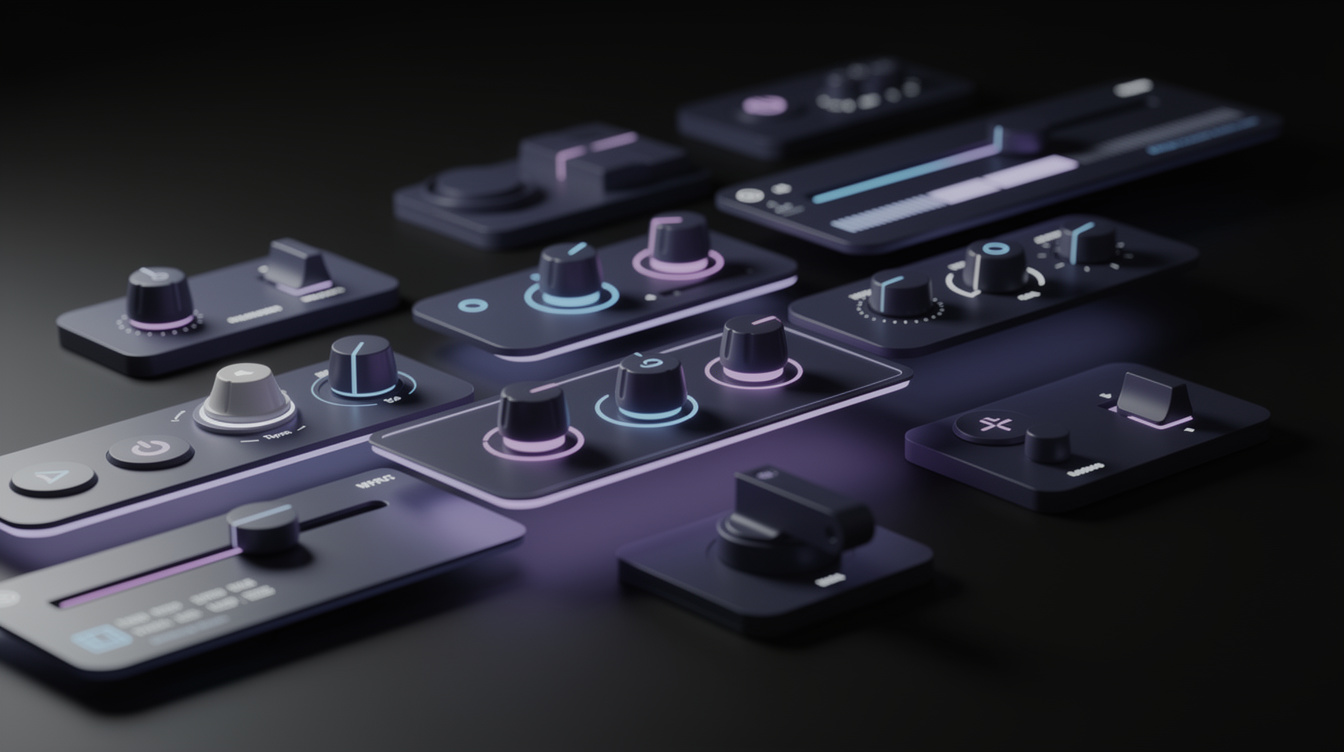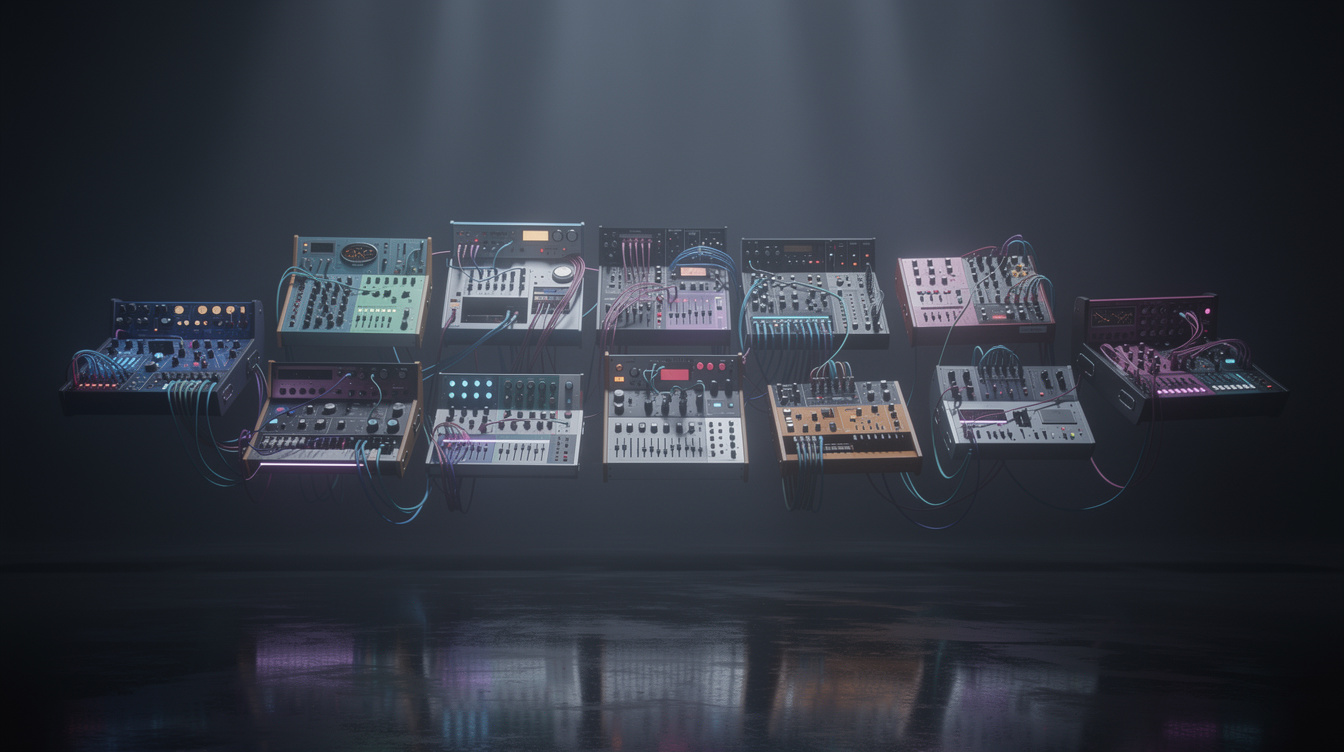
Dozens of synth engines is a lot of choice, and choice is paralyzing when you don't know what's what. Onomo's synths aren't dozens of slightly-different presets. They're genuinely different instruments, each built for a different job. Once you know which is which, you stop endlessly scrolling and start grabbing the right tool for the sound in your head.
Here's the field guide to the core set, grouped by what you actually reach for them to do. Every one runs in the browser, no plugins.
When you need bass
Bazyr is the go-to bass engine, and it's the first place to go for low end — especially 808s. It does the pitch-glide slides that define trap and drill basslines, and it's tuned to sit big and clean in the sub. If you want a tuned 808 or a fat synth bass, start here.
Pryzm (phase distortion) and Kryo (a classic subtractive synth) also make excellent basses when you want something with more character or movement — Kryo in particular is your workhorse for round, analog-style bass.
When you need a lead
Dyrt is an FM/lo-fi engine — gritty, characterful, great for leads with edge and texture. Zynq is a cleaner FM synth for bright, bell-like, metallic leads and stabs. Hyper is a "motion" engine driven by multiple LFOs, so it's built for leads that move and evolve on their own. And Vektyr does vector synthesis — you morph between sound sources on an XY pad, which is fantastic for expressive, shifting leads you can't get any other way.
For something aggressive, Ampyr models electric-guitar/amp territory — useful when you want a lead with drive and bite that sounds played rather than programmed.
When you need pads and atmosphere
Aethyr is an additive engine built from many harmonic partials — gorgeous for lush, evolving, shimmering pads. Sylo is granular, so it turns sounds into clouds of texture: ambient beds, washes, and otherworldly atmospheres. Plexyr has a cross-modulation matrix that's great for complex, slowly-mutating pad textures. And Myst is the flagship hybrid — it combines multiple synthesis approaches, so it's a do-anything engine that excels at big, rich, layered pads and signature sounds.
When you need keys, plucks, and "real" instruments
This is where Onomo gets unusual for a browser DAW. Knylon and Synfyny are physical-modeling engines — they don't play samples, they actually simulate how a string vibrates. Knylon models plucked strings (nylon, steel, 12-string) with real body resonance, so you get believable guitar-like plucks and harp textures. Synfyny models bowed strings — violin, cello — for expressive string lines. They respond and breathe in a way sampled instruments don't.
Tymbre is a wavetable engine voiced for brass — bright, punchy horn-style sounds. Formynt is a formant synth that shapes vocal-tract-like tones, great for vowel-y, talking, choir-ish textures. And Symple is the multi-sample player — recorded instruments mapped across the keyboard and velocity, for when you want the real thing. (For your own chopped sounds, Studio also has a dedicated Sampler track.)
When you want movement built in
Seqyr has sequencing and arpeggiation baked into the engine itself, so a single held chord becomes a rolling pattern — perfect for arps, plucks-in-motion, and generative-feeling parts. Pair it with Hyper (LFO motion) or Wynd (a rich wavetable engine with deep modulation) when you want sounds that animate themselves.
The quick cheat sheet
| You want… | Reach for |
|---|---|
| 808s / synth bass | Bazyr (also Kryo, Pryzm) |
| Gritty / FM leads | Dyrt, Zynq |
| Moving / morphing leads | Hyper, Vektyr, Wynd |
| Lush evolving pads | Aethyr, Myst, Plexyr |
| Ambient texture / clouds | Sylo (granular) |
| Plucked strings / guitar | Knylon (physical model) |
| Bowed strings | Synfyny (physical model) |
| Brass | Tymbre |
| Vocal / vowel tones | Formynt |
| Multi-sampled instruments | Symple |
| Arps / built-in motion | Seqyr |
| Amp / driven sounds | Ampyr |
| Analog all-rounder | Kryo |
And the roster keeps growing
The engines above are the core set, not the whole roster. Newer engines cover ground the originals don't: Reznyr for bass that moves (Reese, neuro, wobble), Acyd for acid lines, Pyani for piano, Orbyt for tonewheel organ with a rotary speaker, Flyte for breath-blown winds, Bowyr for more bowed strings, Opyx for 4-operator FM, and Nybl for 8-bit chip sounds. Same rule applies: pick the job first, then audition the engines built for it.
Get more out of any of them
Whichever engine you pick, two habits make them sound better:
- Start from a preset, then turn the knobs. Each engine ships with presets — use them as a launchpad, then tweak. You'll learn the engine fast and end up with something that's yours.
- Treat it in the mix. A synth sound is half the engine and half what you do after — a little EQ to carve space, saturation for warmth, and the right effects. (See getting pro results in Onomo and the producer's craft.)
The bottom line
Dozens of engines sounds overwhelming until you realize they're organized by purpose: dedicated bass, several flavors of lead, lush and textural pads, genuinely-modeled acoustic instruments, and a few that animate themselves. Pick by the job, audition the two or three built for it, and you'll always have the right sound within reach — without the scroll.
FAQ
How many synths does Onomo have? Dozens of distinct synth engines, and the roster keeps growing — each a genuinely different instrument, not presets of one synth. They cover bass, leads, pads, plucks, keys, brass, strings, and more.
Which Onomo synth is best for 808s and bass? Bazyr — it's the go-to bass engine, with the pitch-glide slides that define trap and drill 808s. Kryo and Pryzm are also great for character-rich basses, and Reznyr is built for bass that moves.
Does Onomo have real instrument sounds? Yes — Knylon and Synfyny are physical-modeling engines that simulate plucked and bowed strings (so they respond like real instruments, not samples), Tymbre covers brass, and Symple plays multi-sampled instruments.
Do I need to know synthesis to use them? No. Start from each engine's presets and tweak from there — you'll get great sounds immediately and learn the synth as you go. Picking by purpose (bass/lead/pad) is all the theory you need to start.
Are the synths free? Yes. Every engine runs in your browser as part of Studio, on the free plan. Open it and they're there to play.
There's a lot of sound in here. There's more Mastering Onomo on workflows and features people miss.
Ready to try it yourself?
Onomo is a creative suite in your browser — a full DAW, a design editor, a video editor and a writing room. Free to start, nothing to install.
On your phone? Make your account now and open Studio later on a laptop, Chromebook or tablet. The free Toolkit works right here.
Open Studio and try them