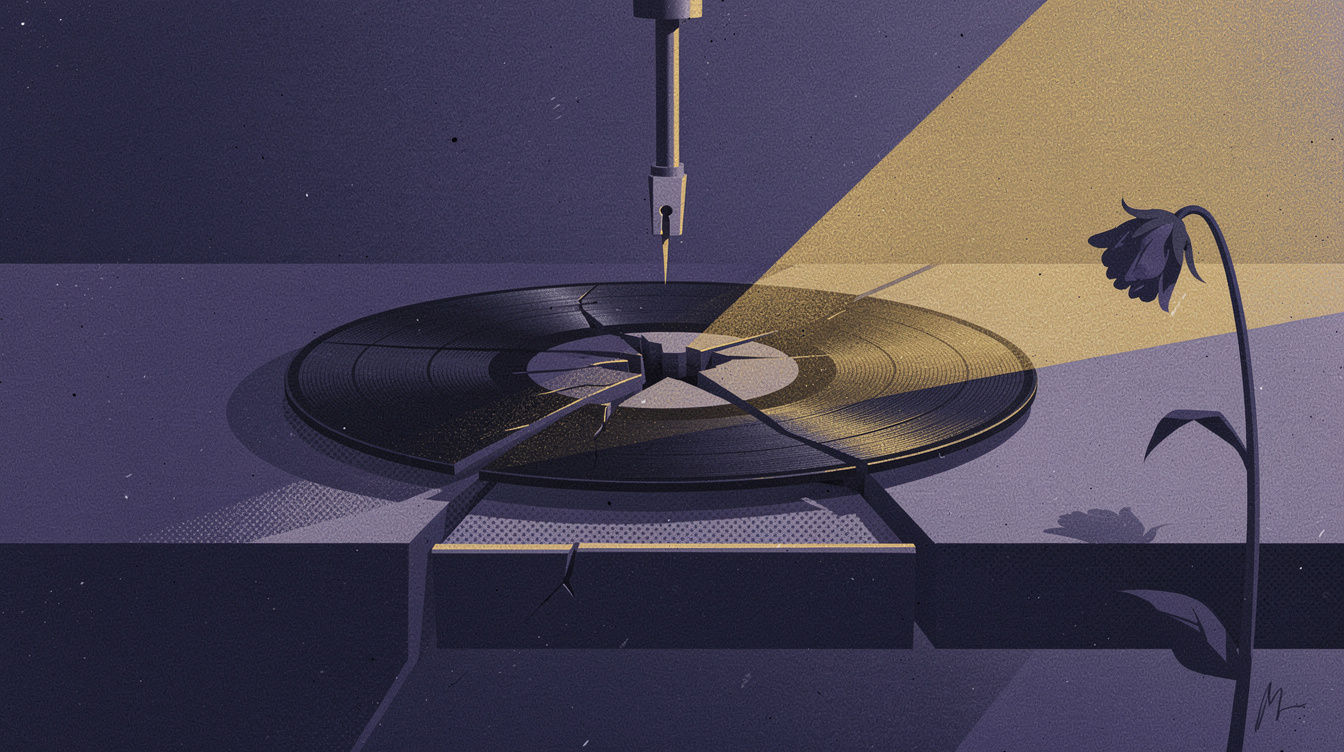
Nobody starts making music because they love metrics. You started because a song moved something in you and you wanted to make people feel that too. But somewhere between that first spark and now, the job quietly changed. You're not just an artist anymore. You're a marketer, a content creator, a social media manager, a release strategist, and a one-person label. And the machine that all of that feeds never, ever says "that's enough for today."
That's the setup for burnout. Not a dramatic collapse — a slow leak. One day you open your project file and feel nothing, and you can't remember the last time making music felt like play instead of work. This is about catching that before it happens, and building a pace you can keep for years instead of months.
Burnout isn't a bad week. It's a system failure.
Let's be precise, because "burnout" gets thrown around to mean "I'm tired." Real creative burnout is different: it's what accumulates after months or years of running at a pace that was never sustainable, until something gives — your motivation, your health, your relationships, or your relationship with music itself.
It rarely arrives as one big event. It shows up as symptoms you can rationalize one at a time:
- You're chronically drained, even after rest.
- The ideas have dried up, and you're forcing it.
- You're irritable, or oddly numb, about music you used to love.
- You're procrastinating on the exact thing you swear you want to do.
- Your inner critic got louder and meaner.
- You've started avoiding it altogether — opening the laptop, then closing it.
If you read that list and winced, you're not lazy and you're not losing your talent. You're running an engine past its limits. And you're not alone in it: in recent industry surveys, a large majority of musicians — around 86% — reported significant mental strain or creative burnout. The conditions are doing this to people on a massive scale. It's not a personal failing.
Why this is happening to everyone right now
The specific trap of being an independent artist today is that the platforms reward frequency, not quality. Release constantly or lose playlist placement. Post daily or watch the algorithm forget you exist. So you start releasing music to stay relevant rather than because it's ready, and posting to feed a feed rather than because you have something to say.
And here's the corrosive part: when your music gets tied to numbers, your creative decisions stop being emotional and start being strategic. You begin choosing the safe hook over the interesting one, the trend over the truth, the thing that'll perform over the thing that's yours. Music stops being something you feel and becomes something you manage. And managing something you used to love is a fast way to stop loving it.
Add to that the isolation — most producers work alone, in a bedroom, at night — and the small creative blocks that a collaborator would shrug off start to feel enormous, because there's no one there to say "that's actually good, keep going."
How to pace yourself before you hit the wall
You don't have to wait until you're flat on your back to fix this. Prevention is mostly about giving yourself permission to do less, on purpose.
Separate "making" from "releasing." A huge amount of burnout comes from treating every creative act as something that has to become content. It doesn't. Protect time where you make music with zero intention of ever posting it — pure play. Loops you'll never finish. Sounds you're just curious about. This is where the love lives, and it's the first thing the grind kills.
Decide your pace, instead of letting the algorithm decide it. Pick a release cadence you could genuinely sustain on your worst month, not your best. If the honest answer is "a song every two months," that's your pace — and it's a real one. The artist who releases six good songs a year for ten years beats the one who releases thirty in year one and quits in year two. It's not close.
Build in real rest, and treat it as part of the work. Athletes don't consider recovery days "lazy" — they know that's when the muscle actually grows. Your creativity works the same way. Time away from music is music work; it's where the well refills.
Protect the inputs. Burnout deepens when you only ever output. Go to shows. Listen to records actively, not as background. Live a life that gives you something to write about. An artist who never refills has nothing left to pour.
If you're already there: how to come back
If you're reading this from inside the wall — exhausted, uninspired, dreading the thing you used to love — the way back is gentler than you'd think, and it is not "push through."
Stop trying to finish things for a while. Don't sit down to make a release. Sit down to explore. Play an instrument with the recorder off. Make textures. Build a four-bar loop you have no plans for. The goal isn't a product — it's rebuilding curiosity, which is the thing burnout actually steals.
Come back at 50%. Whatever your pace was before you broke, restart at half of it. Releasing monthly? Make it every two months. Posting daily? Three times a week. You are rebuilding a capacity, not proving anything. Ramp slowly enough that it sticks.
Fix the system before you rebuild the output. Burnout is a sign that how you were working didn't work. Before you pile the workload back on, figure out what specifically broke — the daily posting, the saying-yes-to-everything, the comparison spiral — and change that thing first. Otherwise you just walk back into the same wall.
And know when it's bigger than burnout. Sometimes what looks like creative burnout overlaps with depression or anxiety that deserves real care. There's no shame in that, and willpower isn't the tool for it. If the heaviness is persistent and reaches past music into the rest of your life, talk to a mental health professional. That's not giving up on your art — it's making sure you're around to make it.
The long game is the only game
The career you actually want isn't a viral month. It's still being here, still making things you're proud of, years from now — with the love intact. That doesn't come from grinding harder than everyone else. It comes from running a pace you can keep when life gets hard, protecting the part of this that's pure play, and refusing to let a feed convince you that rest is failure.
Make music like you intend to do it for the rest of your life. Because if you pace it right, you can.
FAQ
How do I know if I'm burned out or just tired? Tired goes away with a good night's sleep and a day off. Burnout doesn't — it's a persistent drain, a loss of inspiration, and often dread or numbness about music you used to love, building over weeks or months. If rest isn't fixing it, treat it as burnout.
Won't slowing down kill my momentum / hurt me with the algorithm? You might lose some short-term reach. But a sustainable pace you can hold for years beats a sprint that ends in you quitting. There is no momentum at all if you burn out and stop. Pick the pace that keeps you in the game.
Is it normal to feel this way? Yes — overwhelmingly so. Most independent artists wear half a dozen hats and feed platforms that reward constant output. Strain under those conditions is the common experience, not a personal weakness.
What if I take a break and the ideas don't come back? They come back faster when you stop forcing them. Rest and low-pressure exploration are exactly what refill the well. The break isn't where creativity dies; the grind is.
Take care of the artist, and the art takes care of itself. There's more from Artist Life when you want it — but for now, maybe just close the laptop. That counts too.
Ready to try it yourself?
Onomo is a creative suite in your browser — a full DAW, a design editor, a video editor and a writing room. Free to start, nothing to install.
More from Artist Life