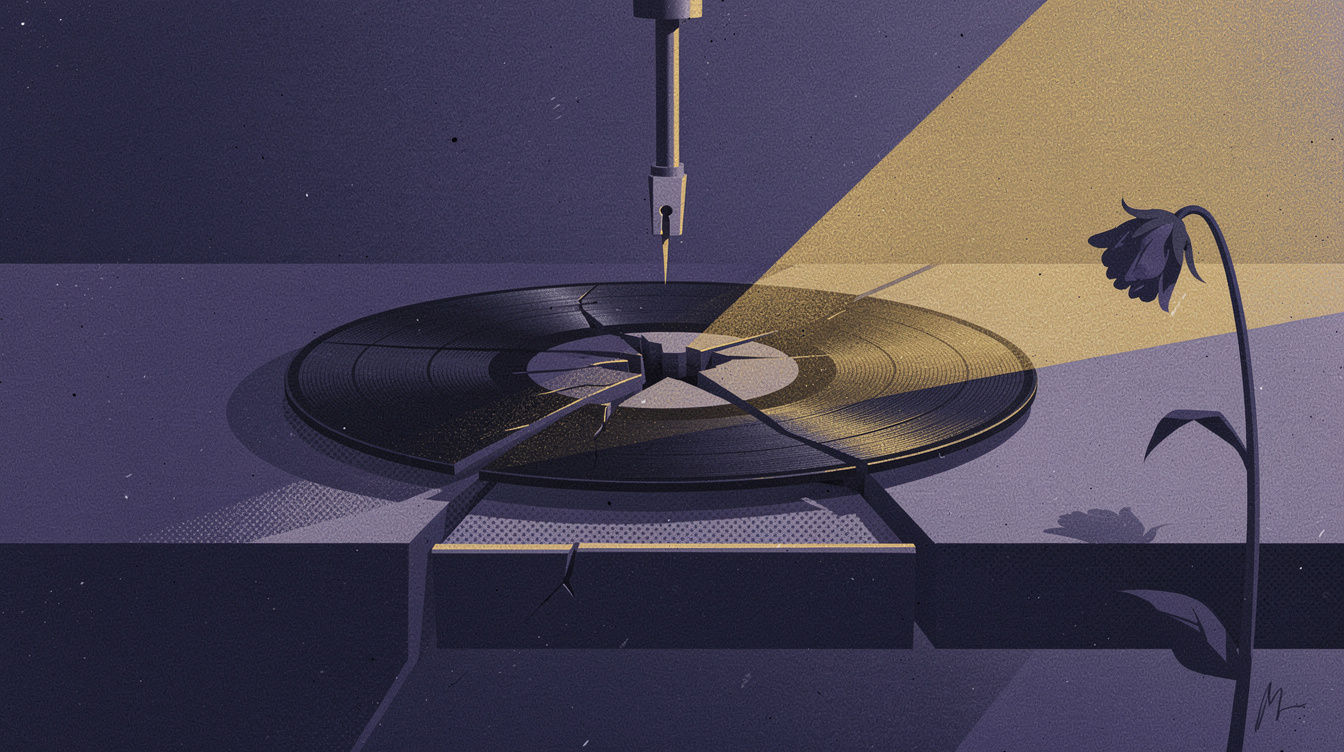
The moment you start putting music into the world in any real way, you sign up for a thing nobody warns you about: eventually, a stranger will be cruel to you about it. A mean comment. A pile-on. Someone who decided, for free, to tell you your voice is bad, your beat is trash, or worse. The cruel twist is that the exact sensitivity that makes you good at this, the emotional openness that lets you write something true, is also what makes that cruelty land like a punch.
You can't fully avoid it (short of never sharing your music, which isn't a real option). But you can learn to handle it without letting it wreck you or scare you into silence. Here's how.
First, sort it into the right bucket
Not all negativity is the same, and treating it as one undifferentiated blob is what makes it overwhelming. Almost everything you'll receive falls into one of three buckets, and each gets handled completely differently:
1. Real, constructive criticism. Someone genuinely engaging with your music and pointing at something specific — "the vocal's buried in the mix," "the second verse drags." It might sting, but it's useful, and it's coming from someone actually paying attention. This is a gift in disguise, even when it's blunt.
2. Trolling. Cruelty for its own sake. Vague, nasty, content-free — "this sucks," "you should quit," random meanness from someone who isn't engaging with the work at all, often anonymous. The point of trolling isn't to inform you; it's to get a reaction. There's nothing to learn from it because it isn't about your music — it's about the troll.
3. Abuse / threats. A different category entirely — harassment, threats, hate speech, targeted cruelty that crosses a line. This isn't "criticism" or even "trolling," and it shouldn't be handled like either.
Ninety percent of the relief here comes from just correctly sorting what you're looking at. The comment that hurt you — which bucket is it actually in? Usually you'll realize the thing that wrecked your afternoon was content-free trolling, which deserves exactly none of the weight you gave it.
How to handle each one
Constructive criticism: consider it honestly, take what's useful, leave the rest. You don't have to agree, but don't reflexively reject real feedback just because it stung — some of it will genuinely make you better. If it warrants a response, respond once, graciously, and move on.
Trolling: the golden rule is don't feed it. Trolls run on reaction; engaging is the fuel. Your options, roughly in order:
- Ignore it. The most powerful move. A troll starved of a reaction is a troll who got nothing.
- Delete or hide it on your own posts. Your page isn't a democracy; you're allowed to curate it.
- Block. You never have to give anyone ongoing access to you. Blocking isn't weakness or "letting them win" — it's just closing a door.
- Discount the anonymous. A nasty comment from a faceless, themeless account deserves roughly zero of your consideration. People say things behind anonymity they'd never say as themselves; treat the source accordingly.
Abuse and threats: take these seriously and protectively. Block, use the platform's reporting tools (they exist specifically for this), and screenshot anything threatening to preserve a record. If something feels genuinely dangerous, it's okay to involve the platform's safety team or, if warranted, the authorities. You do not have to "tough out" harassment as if it's part of the job. It isn't.
Protecting your head (the real work)
Sorting and handling is the tactical layer. The deeper work is not letting the cruelty take up residence in your head, because that's where it does the real damage.
One cruel comment is not the consensus. Our brains are wired to fixate on the single negative thing and ignore a hundred positive ones. Ten people can say they love a song and one person can call it trash, and which one will you replay at 2 a.m.? Notice that bias and consciously correct for it. The loud cruel voice is not the room; it's one person who chose to be loud and cruel.
The trolls aren't a representative sample. The kind of person who takes time to be gratuitously nasty to a stranger's art online is a specific, small, miserable subset of people — not "what everyone really thinks." The vast majority of people who hear your music and don't love it simply… scroll on. Silence isn't hate. The cruelty is coming from a tiny, vocal minority, and it is wildly unrepresentative.
It's allowed to hurt. "Grow a thick skin" is real advice and also incomplete — you're a creative person because you feel things, and you can't fully numb that without numbing the part that makes your art good. So the goal isn't to feel nothing. It's to feel the sting, recognize it for what it is, and not let it make your decisions or define your worth. Hurt for a minute. Don't build a house there.
When to just close the app
Sometimes the healthiest, most professional move is to stop reading the comments.
Plenty of working artists simply don't read replies after they post, or step away from social entirely around a release, because they know what's waiting and they've decided their mental health is worth more than seeing it. This isn't fragile or unprofessional — it's a boundary, and it's a smart one. You do not owe anyone your exposure to their cruelty. You can post your music and then close the tab. You can hand comment-moderation to a friend on a big day. You can mute the words that gut you.
Protecting your peace isn't avoiding feedback that matters — the useful criticism finds its way to you through people you trust anyway. It's declining to marinate in the cruelty that doesn't. Log off. The music is what matters, and it's already out there doing its job whether you're reading the comments or not.
The bottom line
If you make music and share it, some cruelty is coming — not because your music is bad, but because that's the cost of being visible, and the internet hands out meanness for free. The way through is to sort it correctly (real criticism vs. content-free trolling vs. abuse), handle each appropriately (learn / ignore / report), remember that the loud cruel voice is a tiny unrepresentative minority, and give yourself full permission to close the app when you need to. Don't let the smallest, ugliest fraction of your audience scare you out of making things for the rest of it. The people who'll love your music are worth infinitely more than the ones who chose to hate it for sport.
FAQ
How do I tell the difference between criticism and trolling? Criticism engages with your music and points at something specific (useful, even if blunt). Trolling is vague, content-free cruelty meant to provoke a reaction ("this sucks," "quit"), often anonymous. Real criticism teaches you something; trolling is just noise about the troll, not your work.
Should I respond to hate comments? Almost never to trolls — they run on reaction, so engaging feeds them. Ignore, delete, or block. For genuine constructive criticism, you can respond once, graciously. For threats or harassment, don't debate — block, report, and screenshot.
How do I stop a mean comment from ruining my day? Ask whether it's useful information about your music or just ugliness about the person. If it's just ugly, it isn't about you and deserves no energy. Remember the negativity bias: one cruel voice isn't the consensus, and trolls are a tiny, unrepresentative minority.
Is it okay to just not read the comments? Completely. Many working artists don't read replies or step away from social around releases to protect their mental health. It's a healthy boundary, not weakness. The feedback that matters reaches you through people you trust anyway.
When should I report or involve someone? When it crosses from criticism or trolling into threats, harassment, or hate speech. Use the platform's reporting tools, block, and screenshot anything threatening. You don't have to tolerate abuse as "part of the job."
The cruel minority doesn't get to decide whether you make music. There's more from Artist Life on protecting your head while you do.
Ready to try it yourself?
Onomo is a creative suite in your browser — a full DAW, a design editor, a video editor and a writing room. Free to start, nothing to install.
More from Artist Life