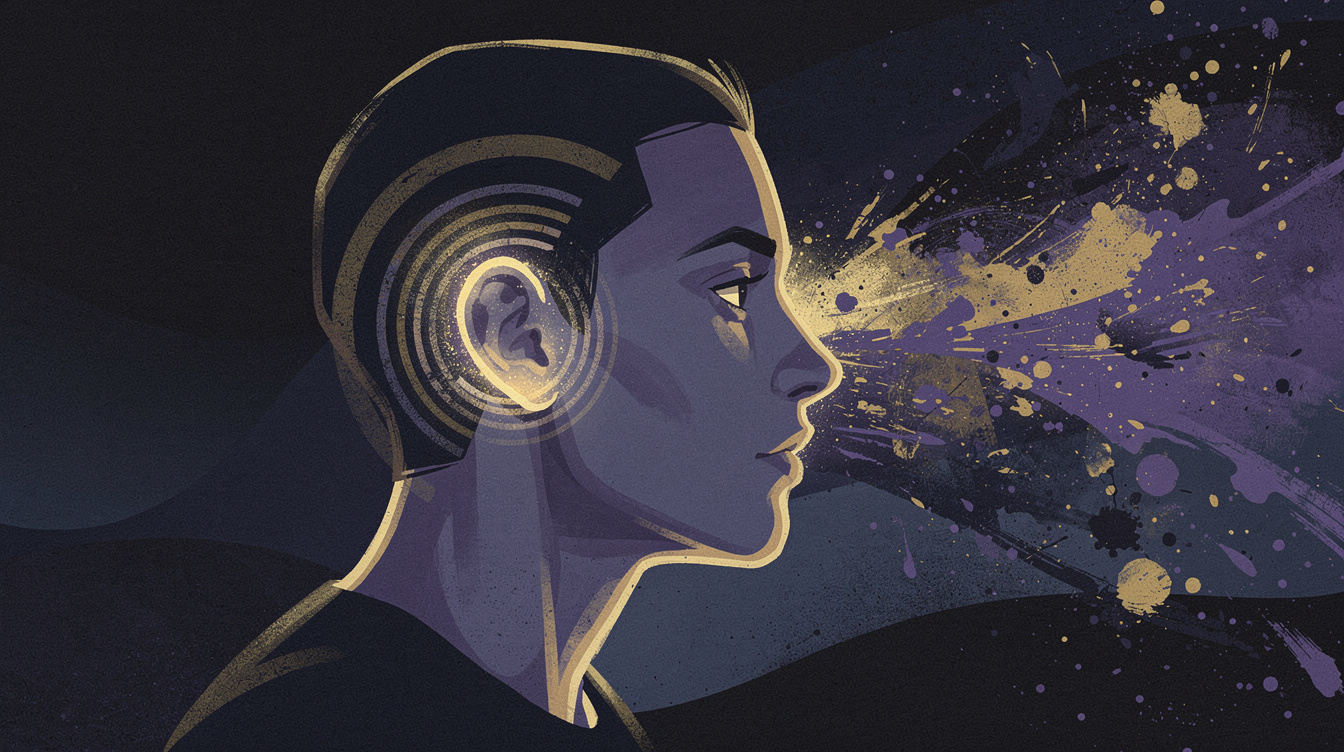
In Lesson 6 you learned to build progressions from the 7 chords that live inside a key. Those always sound correct — but "correct" can also mean predictable. This lesson is about the spice: the chords and moves that step slightly outside the rules to create surprise, emotion, and that "oof, what was that chord?" feeling. This is where progressions go from nice to unforgettable.
The whole lesson is one idea you already met in Lesson 4, pushed further: music is the management of tension and release, and stepping outside the key is the strongest tension tool you have.
Staying in the key is safe. Leaving it is powerful.
Your key gives you 7 "safe" chords. Every one fits, nothing clashes. But because they all belong, none of them surprises the listener. To create a moment of real color, you briefly borrow a chord from outside the key — a note or chord the ear didn't expect — and then resolve back home.
That isn't breaking the rules; it's the next level of the rules. The contrast between "expected" and "unexpected" is exactly what makes the unexpected chord land emotionally. A whole song of surprises is chaos; a song of all-expected is wallpaper. The magic is the occasional departure.
Borrowed chords: stealing from the parallel key
The most useful color trick for producers: borrowed chords (also called modal interchange). The idea is simple — if you're in a major key, you "borrow" a chord from the minor key with the same home note (and vice versa).
The classic example: you're in C major (bright). For one bar, you drop in a chord from C minor, say a minor iv chord or a flat-VI. Suddenly there's a wash of unexpected melancholy in the middle of a happy progression. It's the bittersweet sound behind countless emotional pop and R&B moments: major brightness with a sudden minor shadow, then back to the light.
The surprise switch: major ↔ minor
You already know from Lesson 5 that one note flips a chord's mood. Use that as a surprise. Take a chord that's "supposed" to be minor in your key and make it major for one moment — or vice versa. The listener's ear expected one mood and got the other, which creates a little jolt of brightness or darkness. The "Picardy third" (ending a minor section on a surprise major chord) is the centuries-old version of this; it still works because surprise still works.
Secondary dominants (the simple version)
Don't let the name scare you. Remember the V chord creates strong tension that pulls home to I (Lesson 6). A secondary dominant just borrows that trick to set up a chord other than home: you put a temporary "V-style" chord right before some other chord in your progression, and it makes that chord feel like a mini-destination.
The practical effect: it adds a brief, satisfying pull mid-progression — a "leading you somewhere on purpose" feeling. You don't need to spell it theoretically while producing; just know that a chord with a built-in pull (often a major or dominant-7 chord) placed before a target chord makes the arrival feel earned. It's how progressions gain forward momentum instead of just cycling.
Suspensions and add chords: gentle color
Not all color is dramatic. Two subtle, everywhere-in-pop tricks:
- Suspensions (sus chords): temporarily replace the mood-defining 3rd with the note just above or below it, creating a chord that sounds "unresolved" and wants to fall back into the normal chord. That little resolution (sus → normal) is satisfying and adds motion without changing the harmony.
- Add chords (add9, etc.): layer in an extra scale note for shimmer and openness without changing the chord's basic function. It's the difference between a plain pad and a lush one.
These don't leave the key — they just enrich a single chord. Cheap, easy, and they make everything sound more produced.
The principle that ties it together
Every trick here is the same gesture at a different intensity: create an expectation, then bend it, then resolve. Borrowed chords bend the key. Major/minor switches bend the mood. Secondary dominants bend the direction. Suspensions bend a single chord. And every one of them works because you spend most of the song inside the rules — so the moment you step out, the ear feels it. Color is only colorful against a plain background.
What you actually need to remember
| Idea | The one-line version |
|---|---|
| Leave the key | Briefly borrowing an outside chord = the strongest color tool. |
| Borrowed chords | Steal a chord from the parallel major/minor (esp. minor iv → I). |
| Surprise switch | Flip an expected minor chord to major (or vice versa) for a jolt. |
| Secondary dominant | A "V-style" chord that makes a non-home chord feel like a destination. |
| Sus / add chords | Subtle in-key color — unresolved tension or added shimmer. |
You've now got the toolkit that separates a functional progression from a signature one. One lesson remains, and it's the most important of all. It isn't new theory; it's how to make all of this automatic by actually sitting down and using it at the keyboard and in the piano roll. That's the finale of Volume 2: Lesson 12: Theory at the Keyboard.
Try it now: take a bright major loop and drop one minor iv chord in just before it resolves home. That sudden ache is a borrowed chord — and it's yours now. Open the Studio and hear it.
Ready to try it yourself?
Onomo is a creative suite in your browser — a full DAW, a design editor, a video editor and a writing room. Free to start, nothing to install.
On your phone? Make your account now and open Studio later on a laptop, Chromebook or tablet. The free Toolkit works right here.
Add color to a progression in the Studio