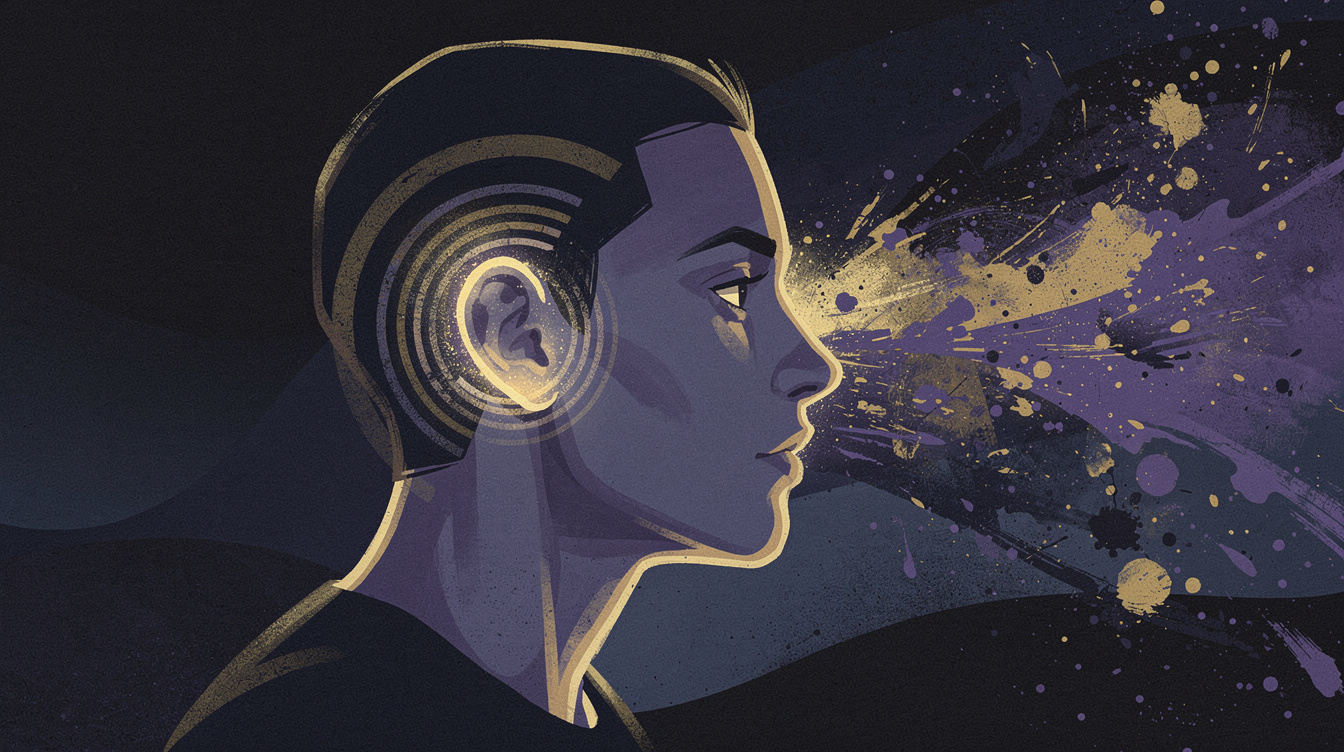
This is the finale of Fundamentals — all three volumes, 24 lessons, from "a note is a frequency" to reharmonization. But one thing makes or breaks everything you've learned: theory you can only recite is trivia. Theory you can hear is a superpower. This final lesson is about closing that gap, training your ear and analyzing real music, so that all of this stops being knowledge and becomes instinct.
Why ear training is the real goal
You can know every chord and scale on paper and still freeze when you sit down to make music. The producers and musicians who seem to work effortlessly aren't recalling rules — they hear what they want and reach for it. They hear a chord and know it's minor. They hear a progression and feel where it's going. They have a melody in their head and find it on the keys in seconds.
That isn't talent. It's a trained ear, and it's completely learnable. Ear training is the bridge that connects all 23 previous lessons to the actual act of making music. Without it, theory stays abstract. With it, theory becomes the way you hear the world.
What to actually train
You don't need to train everything. The high-value targets:
- Intervals — recognizing the distance between two notes by ear (the major 3rd, the perfect 5th, the octave). This lets you find melodies you hear in your head.
- Major vs. minor — instantly hearing whether a chord or song is happy or sad. The single most useful ear skill. (Anchor: the 3rd decides it.)
- Chord qualities — telling a major 7th from a minor 7th from a dominant 7th by their feeling.
- Progressions / function — hearing "that's the tension chord, now it's resolving home" (function by ear).
- Rhythm — counting along, feeling the time signature and where the groove sits.
How to train (it's simpler than you think)
1. Anchor to songs you know. The classic method: link each interval to a famous song (octave = "Over the Rainbow," perfect 5th = Star Wars). Then when you hear that gap in the wild, you recognize it. Same for chord qualities — find a maj7 you love and burn its feeling into memory.
2. Sing/hum what you hear, then find it. Hum a melody, then hunt for the notes on a keyboard or in the piano roll. This single habit trains your ear faster than anything — it's theory, ear training, and transcription at once.
3. Use the tools, then test yourself. Set a scale lock, play around, then try to predict what a note will sound like before you play it — and check. Prediction-then-confirmation is how the ear learns.
Analysis: learn from the music you love
The other half of turning theory into instinct is analyzing real songs. Every song you love is a finished example of these lessons in action. Take a track you admire and figure out:
- What key and mode is it in? Major or minor?
- What's the chord progression? Can you label it in Roman numerals? What function is each chord?
- Are there borrowed chords or secondary dominants creating that special moment you love?
- How does the melody move? Where's its peak? What's the motif?
- What cadence ends each section?
You will learn more from deeply analyzing three songs you love than from re-reading any lesson. Reverse-engineering real music is where theory clicks into place — you suddenly see why that chord gave you chills, and now you can use it yourself.
The whole course, and the only thing that matters now
Step back at the finish line. Across 24 lessons you've gone from notes → rhythm → scales → intervals → chords → progressions → keys → melody → modes → structure → color → application → and the deep harmony of Volume 3. That's the entire skeleton of Western music theory, and you understand it.
But the deepest lesson is the same one we've ended every volume with: none of it matters until you make things with it. Theory describes what already sounded good; it doesn't grant the ability to make good music — using it does. Train your ear, analyze music you love, and then — most importantly — make song after song, letting a little of this knowledge become instinct each time.
You came in not knowing what a note was. You're leaving with the full language of music in your head and the means to make it second nature. There's nothing left to read. There's only the next song.
Go make it. That was always the point.
That completes the Fundamentals course — 24 lessons across three volumes. Start over at Lesson 1, browse the full Fundamentals series, or jump to the hands-on Modern Producer course to learn how it all comes together in a real DAW.
Ready to try it yourself?
Onomo is a creative suite in your browser — a full DAW, a design editor, a video editor and a writing room. Free to start, nothing to install.
On your phone? Make your account now and open Studio later on a laptop, Chromebook or tablet. The free Toolkit works right here.
Train your ear in the Studio