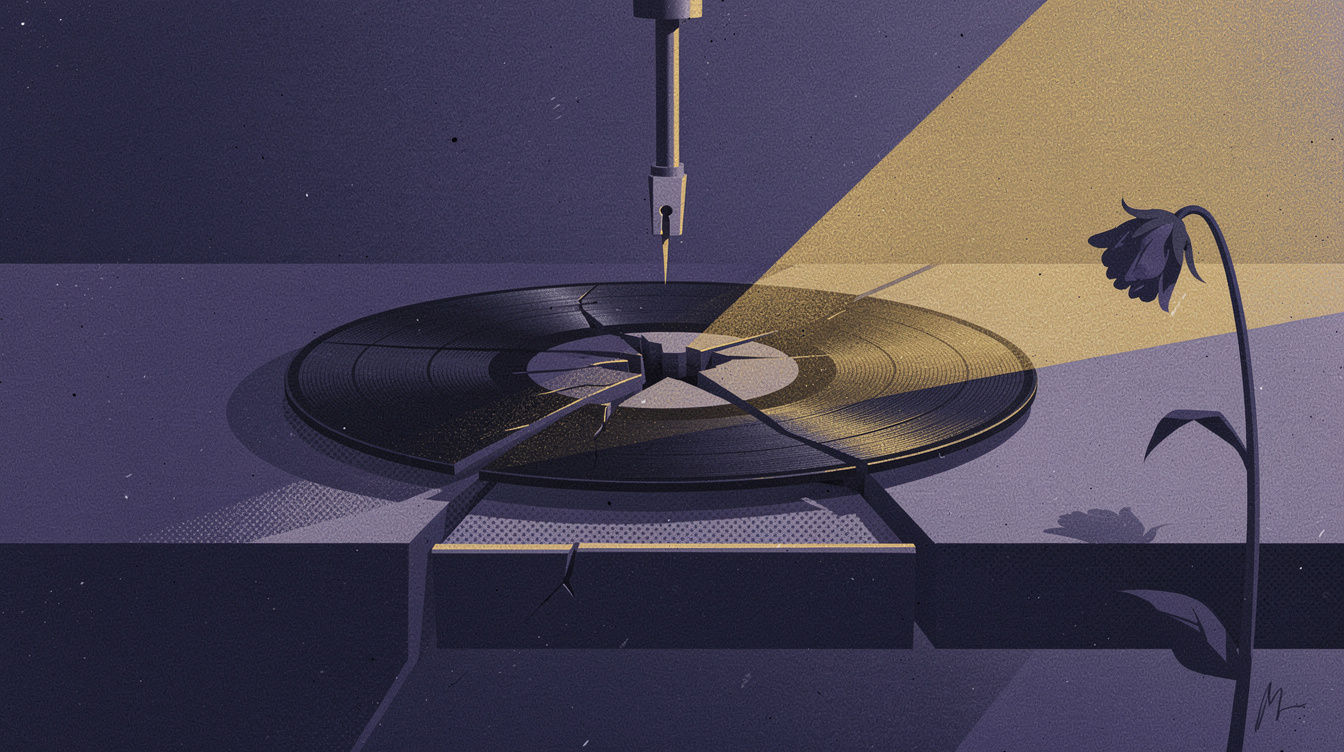
Open your projects folder. Go ahead. Count the unfinished ones — the eight-bar loops that were going to be bangers, the ideas you swore you'd come back to. Now count the finished, exported, out-in-the-world ones. For almost every producer alive, those two numbers are embarrassingly far apart.
This is the most common curse in music production, and it has nothing to do with how talented you are. It's a specific, fixable problem. Here's what's going on and how to break it.
Why finishing is so much harder than starting
Starting a song is a high. A fresh idea, a new sound, that first loop that slaps — it's pure dopamine, zero stakes, all possibility. Finishing is the opposite: it's decisions, problem-solving, arrangement, mixing, and the gut-punch of committing to something that might not be perfect. Modern tools make it easier than ever to start — to generate ideas fast — but finishing asks for a completely different and much less fun set of skills.
So what happens is totally predictable: you ride the high of starting, and the second the work gets hard and unglamorous — the arrangement, the mixdown, the boring middle — a new idea conveniently appears, shiny and frictionless. You abandon the hard thing for the easy high. Again. And again. Until you have 200 intros and no songs.
Recognizing this is half the battle. The urge to start something new the moment a track gets difficult is not inspiration. It's avoidance wearing inspiration's clothes.
The perfectionism trap (and the ghost you're chasing)
The deeper reason you can't let a track go: you're comparing it to something that doesn't exist.
Most people who can't finish are building toward an imaginary ideal — a perfect version of the song that lives only in their head and can never actually be reached, because it isn't real. You'll never feel 100% about a song, so if "100%" is your bar for done, you will literally never finish anything. The perfectionism feels like high standards, but it's a trap that guarantees you ship nothing.
The fix is uncomfortable but liberating: a finished song doesn't need to be perfect. It needs to communicate your idea in a way that feels true to you. That's it. That's the bar. "Done" is not "I can't possibly improve this." "Done" is "this says what I wanted it to say, and now I'm moving on."
Deadlines and constraints are your friends
A blank canvas with infinite options and infinite time is a perfectionist's prison. The cure is limits.
Give yourself a deadline. "This is done Friday" isn't dramatic, but it does something real to your brain — it concentrates your effort and stops the endless, invisible revising that masquerades as work. A deadline forces the decisions you'd otherwise dodge forever. Self-imposed and soft as it is, it works.
Work inside constraints. Infinite choice is paralyzing; limits are freeing. Give yourself a rule: finish this with only the sounds in front of you. One synth. No new samples. A two-hour cap. Eight tracks, no more. Constraints kill the "but maybe if I added..." spiral by taking the option off the table. Paradoxically, you'll be more creative and more finished, because you're solving a defined problem instead of swimming in an infinite one.
Practical moves to get tracks across the line
Beyond the mindset, a few concrete habits make finishing dramatically easier:
- Finish the arrangement before you mix. A huge amount of "I can't finish" is actually "I keep polishing a loop." Force yourself to lay out the whole song — intro, verse, chorus, the works — before you let yourself fix a single EQ. You can't finish a song you haven't actually arranged.
- Name the weakness that's stopping you. Often you stall at the same point every time because of one weak skill — you don't know how to transition, or your mixes fall apart, or arrangement baffles you. Notice the pattern, then go learn that one specific thing. The block is usually a skill gap, not a character flaw.
- Make a "good enough" reference of your own. Instead of measuring against the imaginary perfect version, A/B against a real, finished, professional track in your genre. It turns "is this good?" (unanswerable) into "is this in the ballpark of that?" (answerable, and usually yes).
- Separate creating from editing. Don't write and judge at the same time — it grinds everything to a halt. Get the parts down in one pass, then switch into finishing mode and arrange/mix/commit. Trying to do both at once is a recipe for an eternal loop.
Why finishing is the skill that matters most
The part that should motivate you: finishing is where you actually become a producer. Every skill that separates amateurs from pros — arrangement, transitions, mixing, mastering, decision-making — only gets practiced when you push a track all the way to done. Abandon everything at the loop, and the only thing you ever get good at is making loops.
So finishing isn't just about having songs to show for your time (though you'll have those too). It's the single fastest way to actually improve. Ten finished okay songs will teach you more than a hundred unfinished "perfect" ones, every time.
There's also a friction angle worth a mention: the more scattered your workflow — bouncing between a DAW, a separate place for ideas, another for arranging — the more chances there are to lose momentum and drift onto a new shiny thing. Keeping the whole arc from idea to finished export in one place removes a few of those exits. (It's part of why we built Onomo the way we did — fewer trapdoors between "I started" and "I finished.") But the real fix is the mindset: decide done means done, not perfect.
Go finish one
Pick the unfinished project that's closest to done. Not the most exciting one — the closest one. Give yourself a deadline of today. Decide right now that it doesn't have to be perfect, just true and finished. Arrange it fully, do a quick mix, export it, and let it go.
Then do it again. The muscle comes back fast once you start using it — and on the other side of "good enough is done" is an actual catalog instead of a graveyard of intros.
FAQ
Why can I start songs but never finish them? Because starting is a low-stakes dopamine high and finishing is hard, unglamorous decision-work. When a track gets difficult, a shiny new idea shows up and you chase it instead. That urge is avoidance disguised as inspiration — recognizing it is the first step.
How do I get past perfectionism? Stop comparing your track to an imaginary perfect version that doesn't exist. A song is done when it communicates your idea in a way that feels true to you — not when it's flawless. Lower your standards on purpose until you can finish consistently, then raise them back.
Do deadlines really help? Yes. Even a soft, self-imposed deadline concentrates your effort and stops the endless revising that pretends to be progress. Constraints (one synth, two hours, no new sounds) work the same way — they kill the infinite-options paralysis.
What should I do first to finish more? Pick the project closest to done, set a same-day deadline, arrange the whole thing before you mix, and export it even if it's imperfect. Then repeat. Finishing is a muscle; it comes back quickly once you start using it.
Done beats perfect every single time. Start something — and this time, finish it. There's more from Artist Life on the rest.
Ready to try it yourself?
Onomo is a creative suite in your browser — a full DAW, a design editor, a video editor and a writing room. Free to start, nothing to install.
On your phone? Make your account now and open Studio later on a laptop, Chromebook or tablet. The free Toolkit works right here.
Start (and finish) something