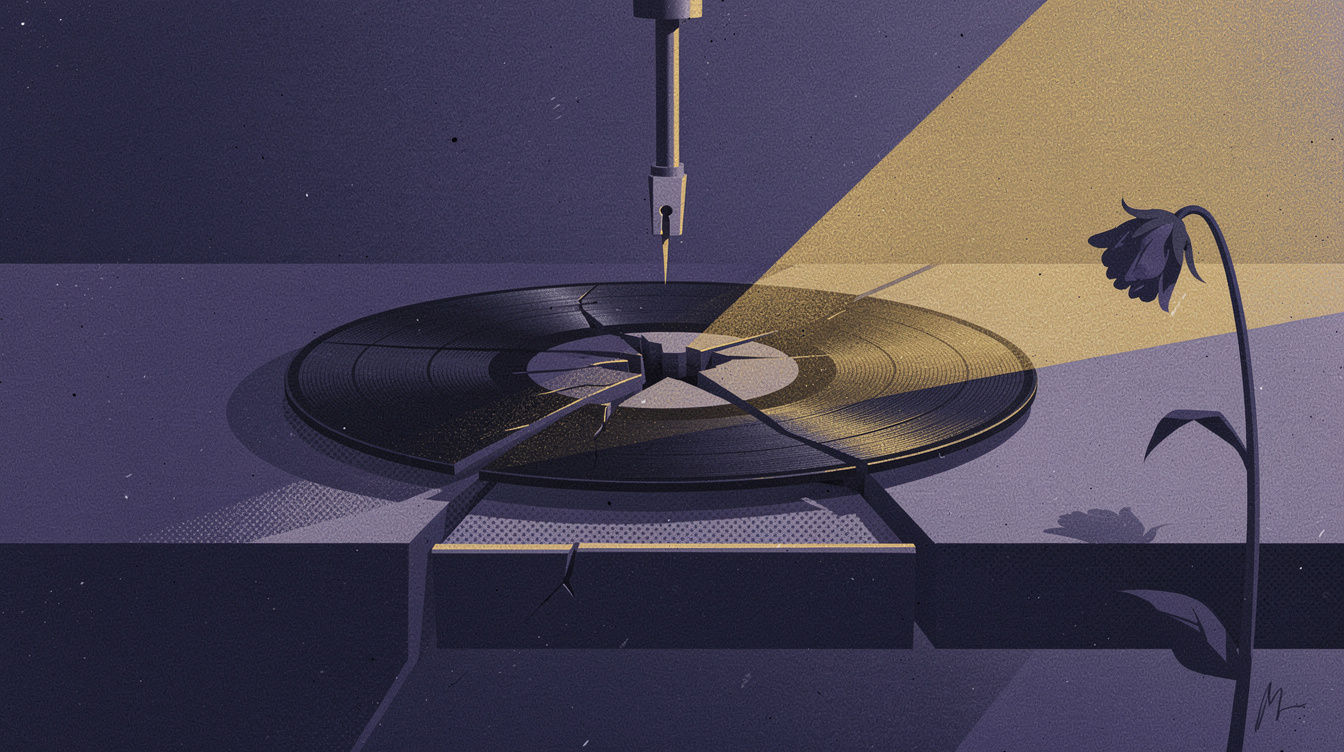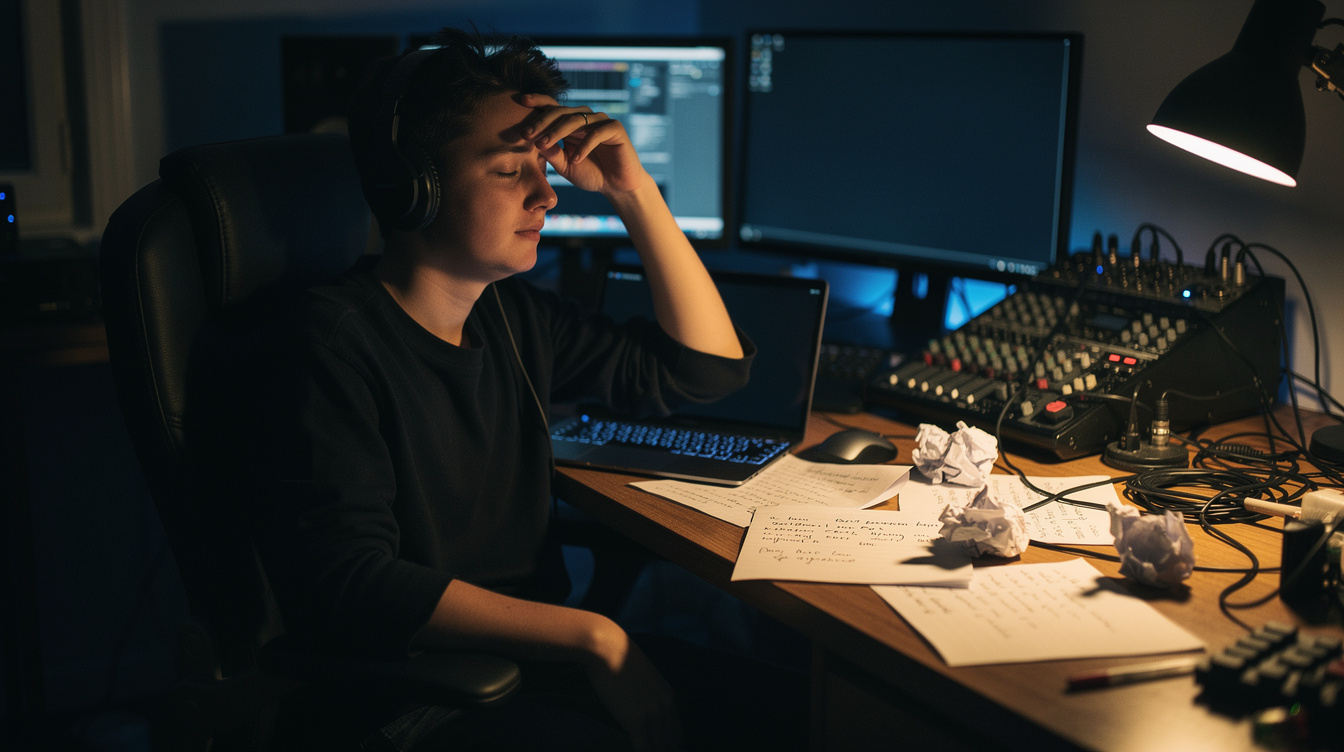
You sit down to make music. You open the project. You stare at the blank arrangement. You manage four bars, decide they're garbage, and close the laptop feeling worse than when you started. Tomorrow you do it again. The ideas that used to flow have dried up, and you're starting to wonder if you've lost it entirely.
You haven't lost it. Creative block is real, it happens to everyone who makes things, and — crucially — it's almost never what it feels like. It feels like "I have no talent and no ideas." It's usually something much more fixable hiding underneath. Let's find it and break it.
What creative block actually is
The reframe that changes everything: creative block is, at its core, the fear of creating something imperfect.
Sit with that, because it's the key to the whole thing. When you "can't make anything," it's rarely that the ideas are gone. It's that some part of you is judging every idea the instant it appears — that hook's been done, that beat's not good enough, that's embarrassing — and killing it before it can become anything. You're not out of ideas. You're rejecting them at the door. The block isn't an empty well; it's a bouncer standing in front of a full one, turning everything away for not being perfect on arrival.
The second big cause is the opposite of scarcity — it's overload. Modern production gives you infinite options: every sound, every plugin, every possible direction, all available at once. That much freedom is paralyzing. Cognitive overload locks you up, because when you can do anything, it's weirdly impossible to do something.
Once you see that block is usually perfectionism + too many choices, the fixes stop being "wait for inspiration" (which never comes on command) and start being practical things you can do today.
The fixes that actually work
None of these require inspiration to strike. They're mechanical ways to get the bouncer to step aside and to cut the infinite choices down to a workable few.
Give yourself permission to make garbage. This is the most important one, so do it first. Decide, out loud, that what you're about to make is allowed to be bad. Take the pressure off completely — no one will hear it, it doesn't have to be good, it doesn't even have to be finished. The block is the fear of imperfection; the cure is removing the requirement to be perfect. You can't be blocked by the fear of making something bad if you've already decided bad is fine. Make the worst beat of your life on purpose. You'll almost always find something usable in the wreckage — and more importantly, you'll be moving again.
Use constraints to kill the overload. Infinite choice is the enemy, so impose limits. Make a whole track with one synth. Sample-flip a single sound. Give yourself ten minutes and a self-imposed rule. Restrict your palette hard. Paradoxically, fewer options make you more creative, because you stop drowning in possibilities and start solving an actual, bounded problem. A blank canvas is terrifying; a small box is a playground.
Change your starting point. A lot of block is just habit — you always start with the same thing (the drums, the intro, the chords) and your brain's worn a rut there. Start somewhere completely different. Begin with the bassline. Or the outro. Or a weird sound you've never used. Reach for an instrument you don't normally touch — it forces your brain into a different mode where it has to adapt instead of autopilot, and adaptation is where fresh ideas live.
Shrink the task until it's stupidly small. "Make a song" is crushing when you're blocked. "Write one line" or "make one four-bar loop" or "just pick a tempo and a key" is not. Break the mountain into the smallest possible first step and commit only to that. Momentum is the actual goal — once you're moving, the next step gets easier. Blocked artists get unblocked by doing something tiny, not something heroic.
Step away — for real. Sometimes you've been grinding at it for hours and you're just fried, and the answer isn't to push harder — it's to stop. Walk away from the DAW entirely. Go outside, listen to music you love, do something completely unrelated. Creativity refills when you're not staring at it. Coming back with fresh ears after a genuine break is one of the most reliable ways to suddenly hear the thing you couldn't hear before. Rest is part of the work, not a betrayal of it.
Work on more than one thing. Keep a couple of projects going so you can switch when one stalls. Stuck on the beat? Jump to a different track for a while. Movement on anything keeps the creative channel open, and you'll often come back to the stuck one with the answer.
Bring in another person. Block is heavier alone. Collaborating takes the pressure off being the sole source of every idea — you bounce off each other, and someone else's spark relights yours. Even just playing your stuck idea for a trusted friend can knock something loose.
Keep the well from drying up
Beyond breaking an active block, a little maintenance makes them rarer:
- Make consistently. Blocks love a creative routine that's gone cold. Even short, regular sessions keep your mind primed for ideas; the longer you go without making anything, the harder it is to start. (More on that in staying consistent.)
- Refill your inputs. You can't pour from empty. Listen widely and actively, go to shows, live a life that gives you something to say. Output without input eventually runs dry.
- Learn a little theory or a new technique. Sometimes the block is just a skill gap — you can hear what you want but can't execute it. Expanding what you can do expands what you can imagine. (See scales and modes explained for a starting point.)
The bottom line
Creative block isn't proof you've run out of talent — it's usually perfectionism and choice-overload wearing a scary mask. You break it not by waiting for inspiration, but by lowering the stakes until your inner critic has nothing to attack: give yourself permission to make garbage, slap on tight constraints, start from a weird place, shrink the task to something tiny, and step away when you're fried. The goal isn't a masterpiece. The goal is motion — and once you're moving again, the ideas you thought were gone turn out to have been there the whole time, just waiting for you to stop guarding the door.
So go open the project and make something bad on purpose. It isn't a cop-out; it's the cure.
FAQ
Why can't I make anything good right now? Usually because your inner critic is rejecting every idea the instant it appears (perfectionism) and/or you're paralyzed by infinite options (overload) — not because you're out of talent or ideas. Block is typically fear in disguise, and fear is fixable.
What's the fastest way to break a creative block? Lower the stakes: decide what you make is allowed to be bad, then make something — anything — with tight constraints (one synth, a short timer). Removing the pressure to be perfect is what gets you moving, and motion is the actual cure.
Should I push through it or take a break? Both have a place. If you're fresh, try a constraint or a new starting point to get moving. If you've been grinding for hours and you're fried, stop — a real break and fresh ears later is one of the most reliable fixes. Pushing harder on an exhausted brain usually backfires.
Does collaborating help with creative block? A lot. It takes the pressure off being the only idea-source, lets you bounce off someone, and often relights your own spark. Even playing a stuck idea for a trusted friend can knock something loose.
How do I stop getting blocked so often? Make consistently (cold routines invite blocks), keep refilling your inputs (listen widely, live a life worth writing about), and keep learning — sometimes the block is just a skill gap between what you can hear and what you can execute.
Motion beats perfection every time. Open a project and make something — it doesn't have to be good. There's more from Artist Life on the rest.
Ready to try it yourself?
Onomo is a creative suite in your browser — a full DAW, a design editor, a video editor and a writing room. Free to start, nothing to install.
On your phone? Make your account now and open Studio later on a laptop, Chromebook or tablet. The free Toolkit works right here.
Start making something