A release doesn't live in one place. It lives in seven.
The beat is in a DAW. The lyrics are in a notes app. The cover is in a design tool you pay for monthly. The video is in another one. The references are in a group chat. The plan — if it exists — is in a doc you abandoned. And somewhere in the middle, an AI tool you signed up for once is quietly billing you.
None of those tools are bad. Most of them are excellent. The problem isn't quality — it's that they don't know about each other. So you spend your creative time being a file clerk: export, import, re-sync, re-upload, re-explain. By the time you're back in the song, the idea has cooled.
We built Onomo because we think that's backwards. The hard part should be the music. Everything else should get out of the way.
The bet: integration beats best-in-class
There's an old argument that you should always use the best tool for each job. It's good advice — right up until you're the one holding all the files.
When you're a solo artist shipping a release, the bottleneck isn't whether your reverb is the absolute finest reverb on earth. The bottleneck is the seam between apps. Every handoff is a place to lose the thread. Task-switching research summarized by the American Psychological Association puts the cost of constant context-switching as high as 40% of your productive time. For a bedroom producer, that's the gap between finishing a track this weekend and watching it sit in a folder for six months.
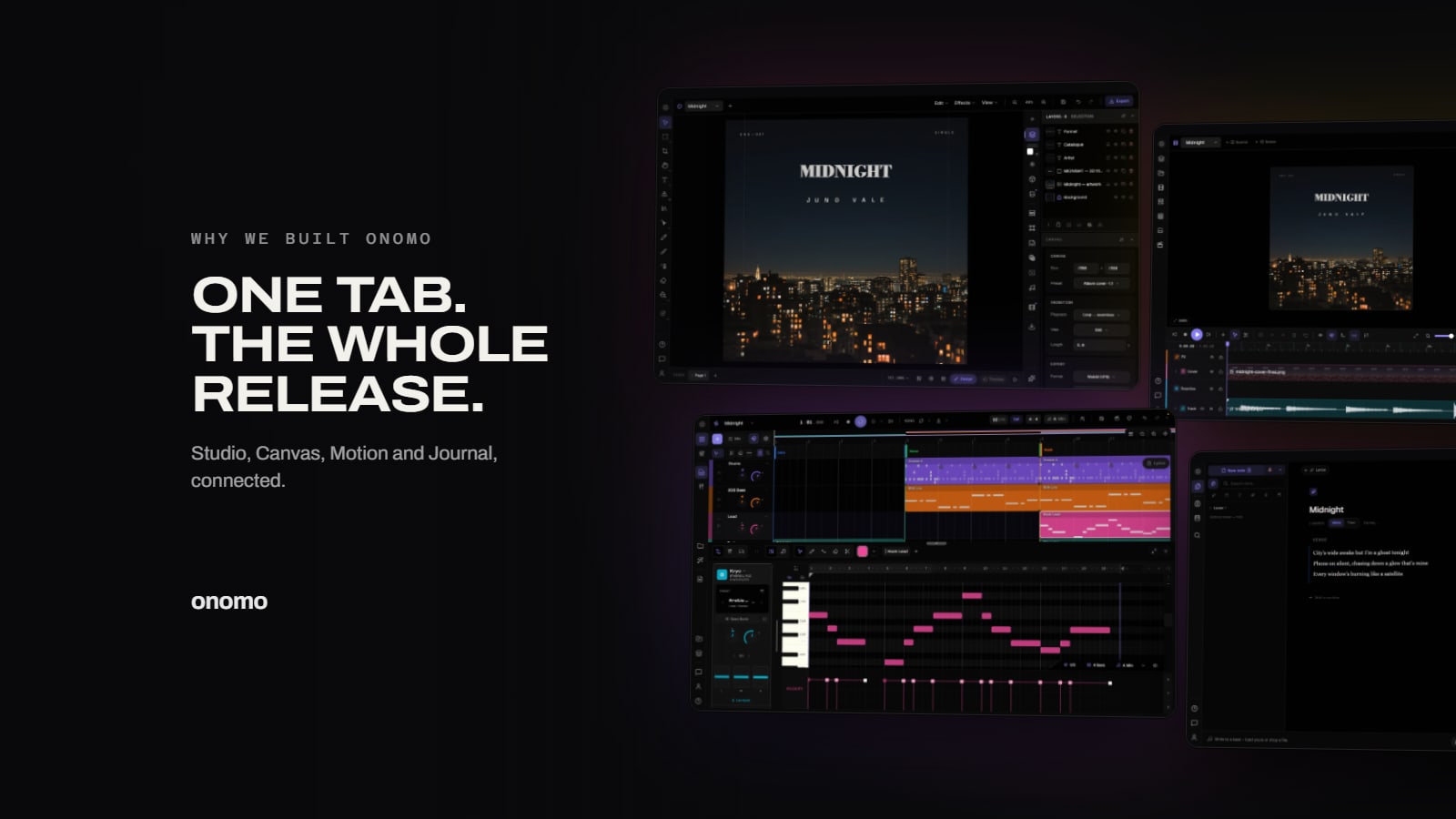
So we made a different bet: a set of tools that are each strong enough to stand on their own, but built to talk to each other so tightly you never have to leave the zone.
- The cover opens already holding your song — its title as live text, its existing artwork on the canvas, its waveform as a graphic you can recolor.
- The video lines up to lyrics you timed once, in the writing room, and never again.
- The plan stays current with the projects you're actually making, instead of starting empty and ending abandoned.
Nothing gets re-exported, re-uploaded, or re-explained. The work moves with you.
Built from scratch, not stitched together
It would have been faster to wrap a pile of existing libraries and call it a suite. We didn't.
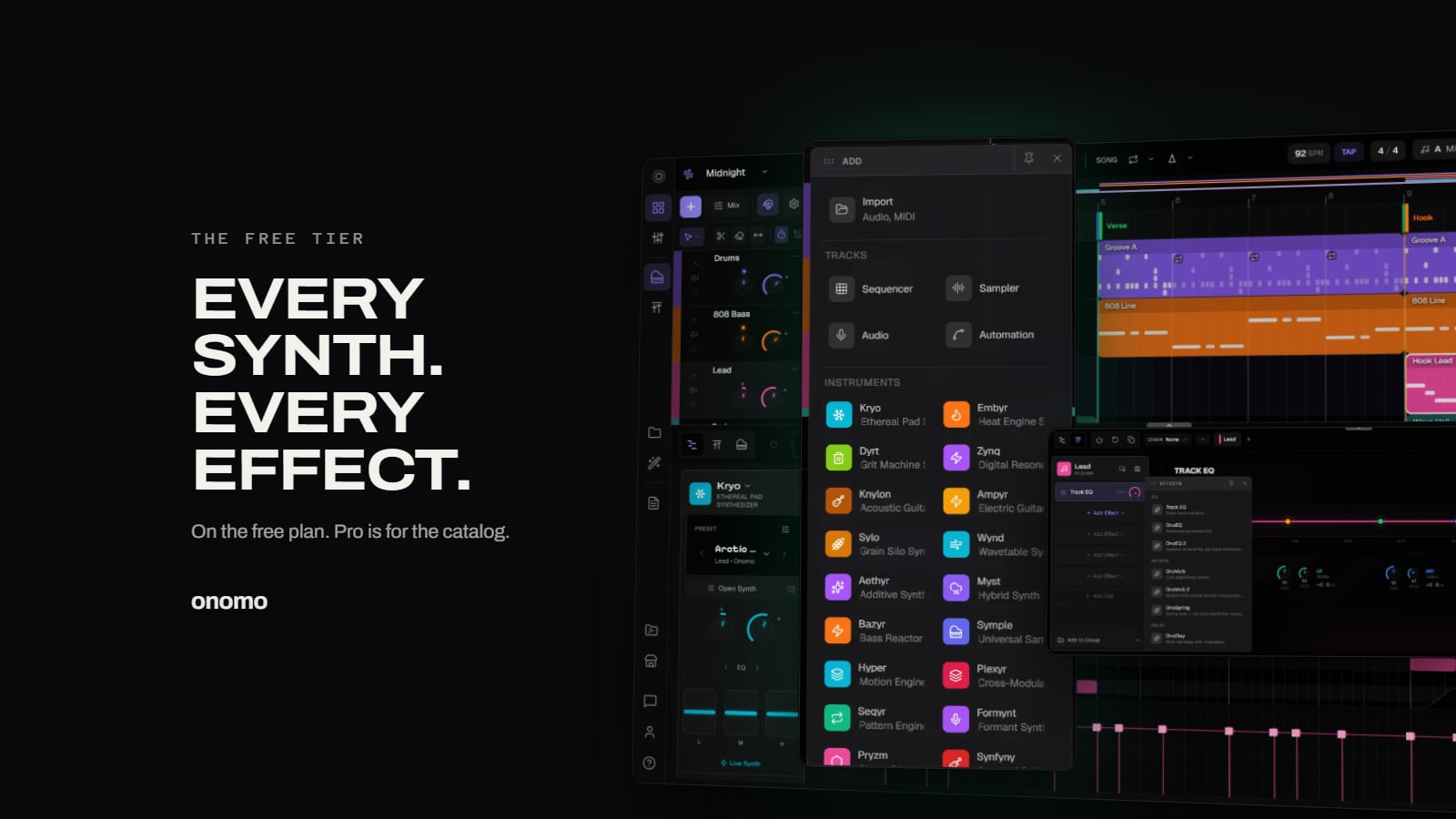
The Studio is a real DAW with its own audio engine — 50 synth engines and a full kit of synthesized drum engines, each its own kind of synthesis, hand-written as AudioWorklets. Real DSP, running in your browser tab, not a sample player pretending to be a synth.
Canvas is a real layer-based design editor — image, text, shape, path, adjustment, filter and 3D layers, blend modes, masks, a deep font library and real 3D materials. Not a poster-template filler.
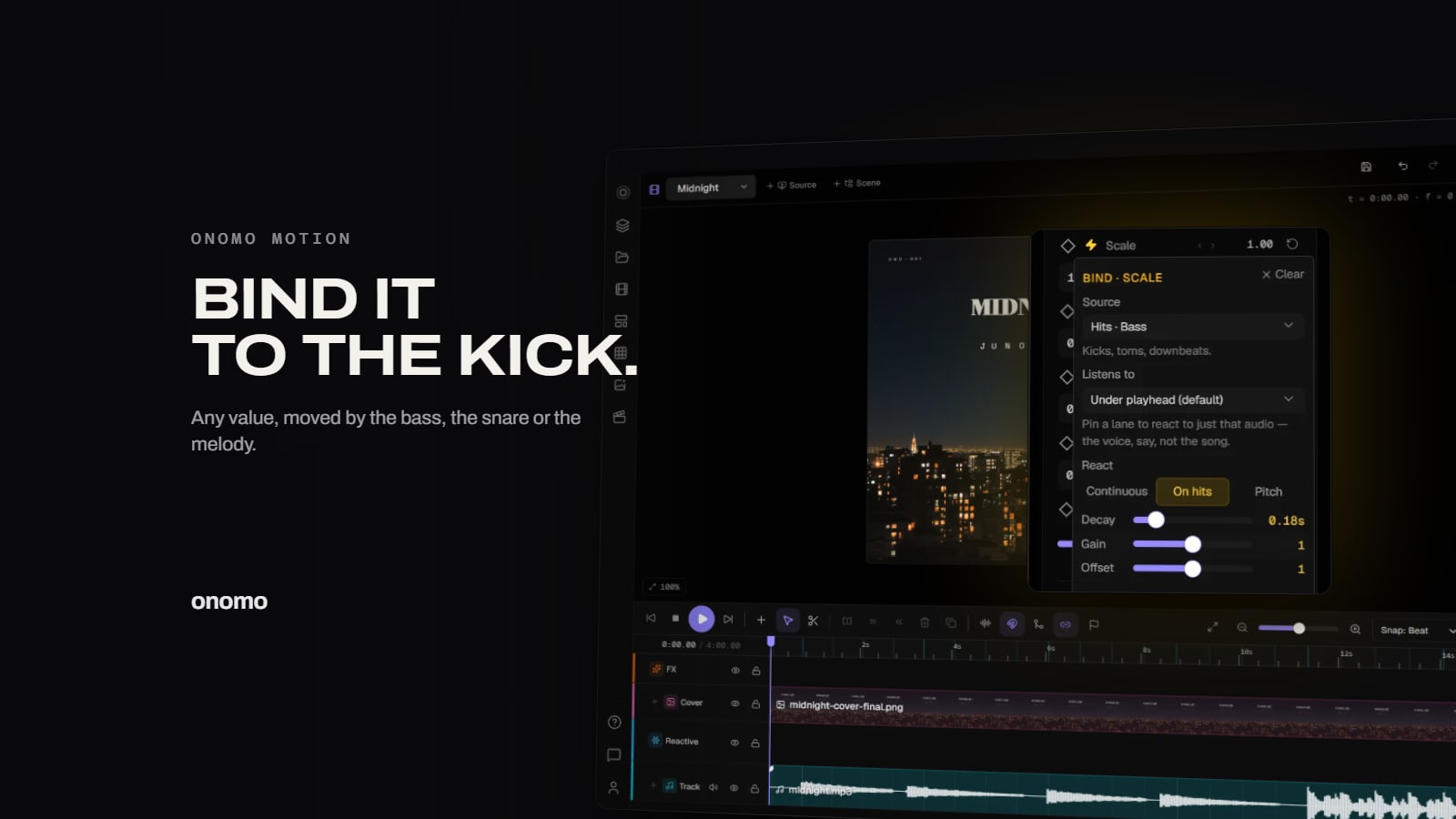
Motion is a browser video editor with an audio brain: it can bind a visual move to the hits in the low end, the energy in the highs, the pitch of a line — or to a single stem on its own track — because it actually listens to the track. The zoom-punch on every kick that takes an evening of keyframing in a desktop app is one bind here.
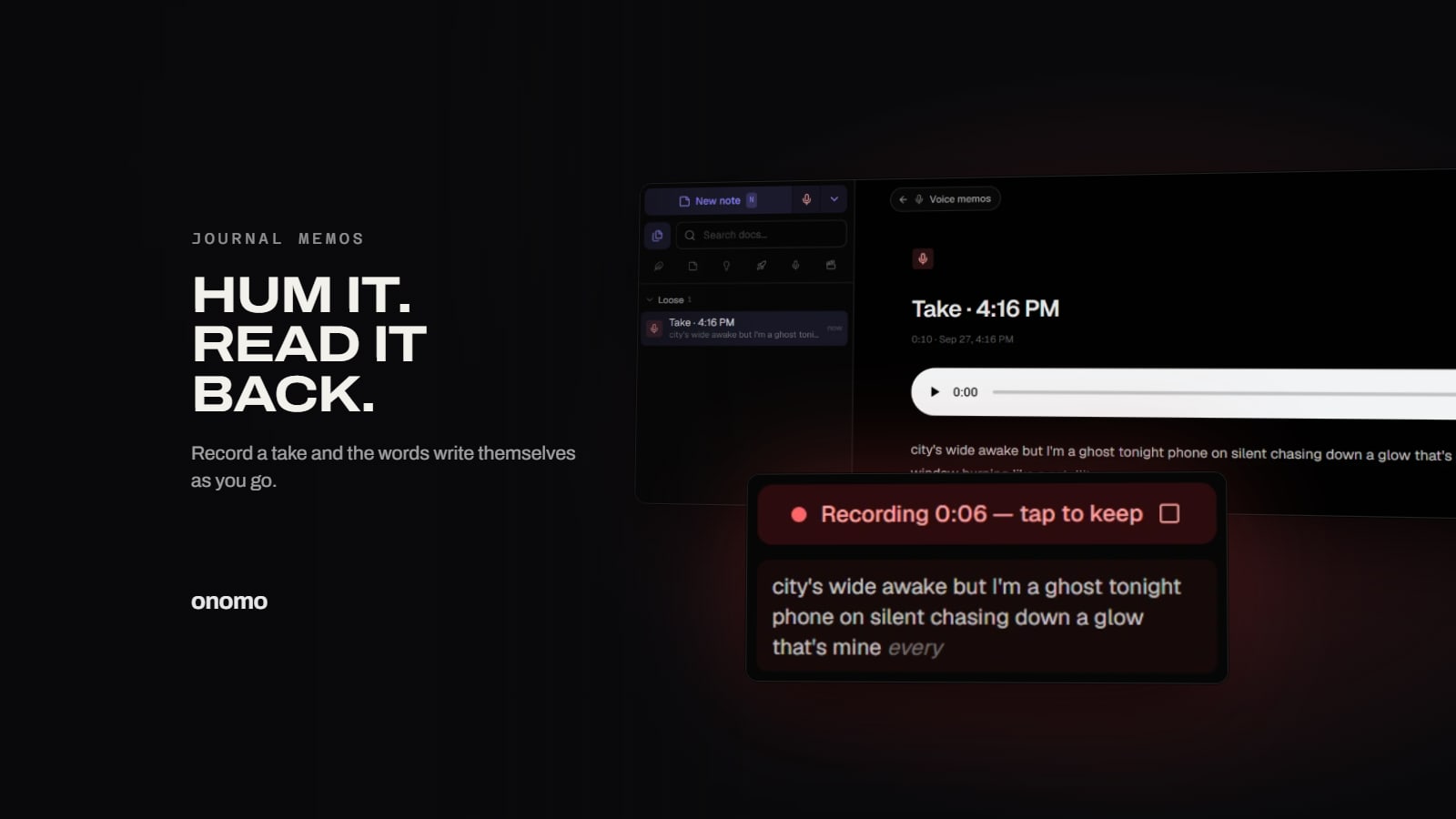
Journal is the pre-production room — lyric docs with a built-in rhyme finder (perfect, near, slant, even multi-word chains), voice memos that transcribe as you talk, an infinite brainstorm canvas, and a roster that plans around your live projects.
We built it from scratch because that's the only way the pieces could be this connected. You can't wire together tools that were never designed to know about each other.
The creative tools are free. On purpose.
Here's the part we feel strongest about: the tools to make the music are on the free plan. Every synth, every drum engine, every effect, every surface. Nothing creative sits behind a paywall.
It's the whole point. The talent in this generation of artists is not the limiting factor. Access is. A teenager with a laptop and an idea shouldn't need a month's rent in software subscriptions before they can find out whether they're good at this.
So the free tier is the real product, not a crippled demo. Paid plans are for storage and for AI credits — the things that genuinely cost us money to run. The creative engine itself is yours.
Where we are, honestly
Today is launch day. Signups are open, and anyone can make an account and start. We're still early — there are rough edges, and we'll be the first to point at them as we file them down, out loud, here on this blog.
We've also kept a few things back on purpose. Some tools we built aren't ready to carry a public launch yet, so they're switched off until they are. We'd rather ship fewer things that work than more things that almost do.
But the core is real and it's running, today, in a browser tab: write the words, make the beat, design the cover, cut the video, plan the drop — one place, all connected, free to start.
That's why we built Onomo. If it's the studio you wished existed when you started, it was built for you.
The door's open. Come make something.
Ready to try it yourself?
Onomo is a creative suite in your browser — a full DAW, a design editor, a video editor and a writing room. Free to start, nothing to install.
On your phone? Make your account now and open Studio later on a laptop, Chromebook or tablet. The free Toolkit works right here.
Open the studio — free