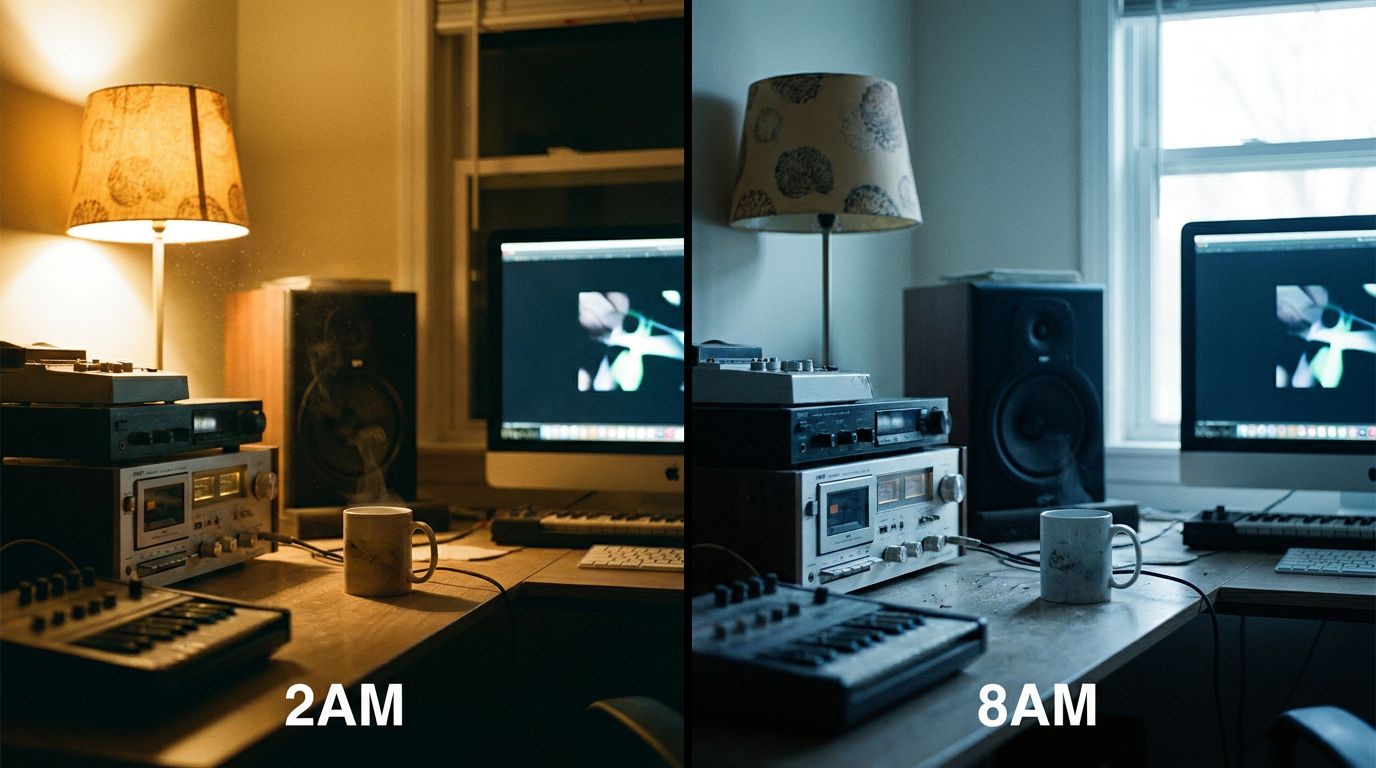
Every producer knows this exact heartbreak. It's 2am, you've been deep in a track for hours, and it sounds incredible — best thing you've ever made. You go to bed buzzing. You wake up, hit play with your coffee, and... it sounds flat, muddy, amateurish. What happened overnight? Did the track change? No — you did. And understanding why is useful, because it happens to everyone and there are real ways to beat it.
It's your ears (and brain), not the track
Several real psychological and physical effects conspire to make late-night you a terrible judge of your own music:
1. Ear fatigue. This is the big one. Your ears literally tire over a long session. After hours of listening, your hearing adapts — high frequencies dull, your sense of balance drifts, and you stop noticing problems you'd catch instantly when fresh. By 2am, you're not hearing the track accurately; you're hearing it through exhausted ears that have normalized all its flaws.
2. Adaptation. Spend long enough with any sound and your brain decides it's "normal." A mix that's too bright, too bassy, or too quiet starts to sound correct simply because you've been marinating in it. You lose your reference point entirely — which is exactly why reference tracks exist.
3. The emotional high. Finishing something feels amazing. That rush of accomplishment and dopamine bleeds into how you hear the work — you're not judging the music, you're feeling the triumph of having made it. The next morning, the high is gone, and you hear it more soberly.
4. The late-night vibe. Quiet, dark, focused, maybe tired — late night is an emotionally heightened state where everything feels more profound. The same track in harsh morning light, distracted, with chores waiting, simply lands differently.
How to beat it
You can't stop being human, but you can build habits that give you an honest second opinion — from yourself:
Sleep on it (literally). The single best mixing tool is time. Never finalize a mix the same night you made it. Fresh ears the next day will catch what tired ears missed. The "it sounds bad now" reaction is the tool working — it's showing you real issues. Fix them with fresh ears, then sleep again.
Take breaks during the session. Even 10–15 minutes away resets your ears a little. Step out, get water, listen to something else, come back. Problems jump out after a break that were invisible before.
Reference constantly. A/B against a finished pro track (level-matched) throughout the session, not just at the end. It re-anchors your fatigued, adapted ears to an objective standard so you drift less.
Mix at lower volumes. Loud playback flatters everything and fatigues your ears faster. If it sounds balanced quiet, it'll hold up loud.
Check on different speakers. Phone speaker, earbuds, laptop, car. A mix that only sounds good on your headphones at 2am isn't finished — most people will hear it on terrible speakers.
The deeper lesson: don't trust a single listen
The real wisdom here is humility about your own perception. No single listen — high or low — is the truth. Your judgment of your own music swings wildly with fatigue, mood, time of day, and emotional state. The pros don't have magically stable ears; they've just learned not to trust any one moment and to judge across many fresh listens over time.
So the next time a track sounds like garbage the morning after, don't spiral into "I'm a fraud, I can't make music." You're just hearing it with rested ears for the first time. Note what genuinely needs fixing, fix it, sleep on it again — and trust the average of your fresh listens, not the panic of any single one.
The track didn't get worse overnight. You just got honest. Use it.
Ready to try it yourself?
Onomo is a creative suite in your browser — a full DAW, a design editor, a video editor and a writing room. Free to start, nothing to install.
On your phone? Make your account now and open Studio later on a laptop, Chromebook or tablet. The free Toolkit works right here.
Come back fresh in the Studio