If you make beats, two questions stall almost everyone: what do I charge, and what is the buyer even allowed to do with it? Get the licensing wrong and you'll either scare buyers off or accidentally sell away something you meant to keep. Price it blindly and you'll either undercut yourself or price out of every sale.
This is the plain-English breakdown of how beat licensing works, what people actually pay, and how to make your music ready for the bigger opportunities like sync.
Heads up: this is general education, not legal or financial advice. License terms and going rates vary by producer, genre, and market, and contracts differ — confirm specifics (and have real contracts reviewed) before you sell.
The two license types you have to understand
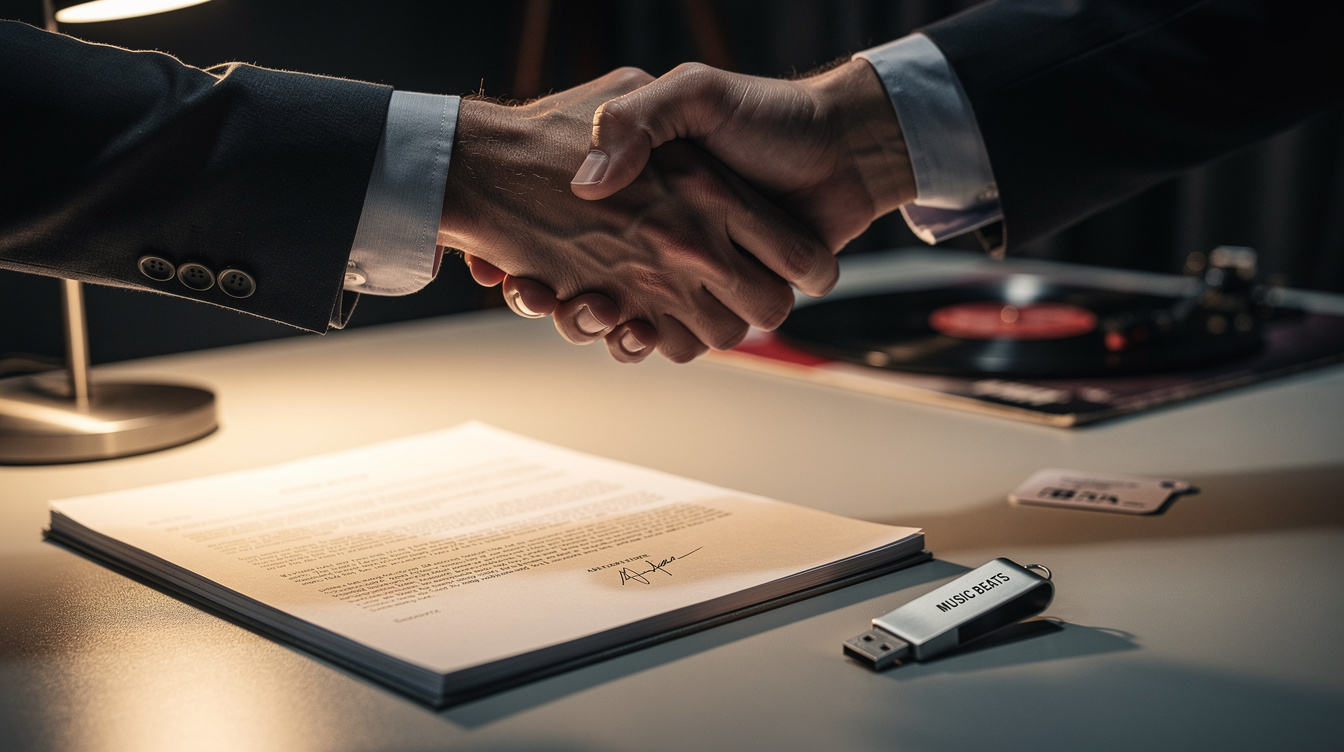
Almost every beat sale is one of two kinds of license. The difference is simply who keeps the right to sell that beat again.
Lease (non-exclusive) You — the producer — keep ownership of the beat and can keep selling the same beat to other people. The buyer gets permission to use it under set terms, but they're not the only one who has it. Because you can resell it many times, leases are cheaper. This is the bread-and-butter of online beat sales.
Exclusive The buyer gets exclusive use of the beat, and you take it off the market — no more selling it to anyone else. An exclusive license generally doesn't expire. Because the buyer is paying for sole use, exclusives are pricier, often much more.
| Lease (non-exclusive) | Exclusive | |
|---|---|---|
| Who keeps ownership | Producer | Typically transfers / sole use to buyer |
| Can you resell it? | Yes, to others | No — taken off the market |
| Price | Cheaper | Pricier |
| Expires? | Often term-limited | Generally doesn't expire |
| Used by labels / sync? | No | Yes — required |
Lease pricing tiers
Leases are usually sold in tiers, where a higher price gets the buyer better files and broader rights (more streams, more distribution, stems included). Rough, common ranges look like this:
| Lease tier | Typical price | What the buyer usually gets |
|---|---|---|
| MP3 lease | ~$10–30 | Basic MP3 file, limited use |
| WAV / standard lease | ~$20–50 | Higher-quality WAV, broader limits |
| Premium / tracked-out (with stems) | ~$50–100 | Individual track stems for full mixing control |
| Unlimited license | ~$100–250+ | No caps on streams/distribution |
These are ballparks, not fixed rules — but they're a realistic map of where the market sits for most producers selling leases online.
Exclusive pricing — it's about reputation
Exclusives swing wildly, and the variable is mostly your reputation and demand:
- A bedroom or newer producer might charge around $200–500.
- A common starting range for exclusives is roughly $500–1,000.
- Established producers with a track record can command $2,000–$10,000+.
The beat didn't necessarily get "better" between those numbers — the producer's name, results, and demand did. That's the honest mechanic of beat pricing: price reflects reputation and demand more than the audio itself.
Why labels and sync need exclusives
Here's a point that catches producers off guard: labels and sync agencies will not use a non-exclusive beat. If a beat could still be sold to ten other people, a label can't safely build a single around it, and a sync agency can't license it into a TV show or ad. For those opportunities, an exclusive is required — full stop. So if you're hoping to place beats with serious artists or in media, you need beats you can offer exclusively.
And to be clear about your own materials: producers also make money from sample packs and presets — selling the raw sounds, loops, and synth settings other producers build with. It's a separate income line worth considering alongside beats. (You can produce the beats, loops, and packs you sell in a tool like Onomo.)
Licensing your music for sync
If you're an artist (not just selling beats) and you want your songs placed in film, TV, ads, or games, your music has to be sync-ready. Three things make it eligible:
- It must be cleared. No uncleared samples. If you used someone else's recording or composition without permission, it can't be licensed — a single uncleared sample can kill an otherwise perfect placement.
- It must be registered with a PRO. A performing rights organization tracks and collects the performance royalties your placement generates. (More on PROs and the royalty side in how music royalties work.)
- You need quality stems. Music supervisors often need to adjust a track to picture — pull vocals up, drop instruments out. Having clean, separated stems ready makes your music usable and far more likely to get chosen.
Sync is one of the best-paying opportunities in music, but it rewards preparation. The artists who land placements are the ones whose music is already cleared, registered, and stem-ready before the opportunity shows up.
A quick mental model for pricing
- Lease when you want volume and to keep reselling the beat.
- Exclusive when a buyer wants sole use — and when you're aiming at labels or sync.
- Price to your current reputation, then raise as demand grows.
- Keep stems and clearances tidy so you're ready for the high-value deals.
FAQ
What's the difference between a lease and an exclusive beat? A lease is non-exclusive — you keep ownership and can sell the same beat to others, so it's cheaper. An exclusive gives one buyer sole use, takes the beat off the market, generally doesn't expire, and costs more.
How much should I charge for a beat lease? Common ranges: MP3 lease around $10–30, WAV/standard around $20–50, premium/tracked-out with stems around $50–100, and unlimited around $100–250+. Use these as a realistic map and adjust to your market.
How much do exclusives sell for? It depends heavily on reputation. A newer producer might charge around $200–500, a common starting range is roughly $500–1,000, and established producers can command $2,000–$10,000+.
Why won't a label use my non-exclusive beat? Because the beat could still be sold to others. Labels and sync agencies need exclusivity to safely build a release or a placement around it, so they require an exclusive license.
What does it take to license my song for sync? Three things: it must be cleared (no uncleared samples), registered with a PRO so performance royalties are collected, and backed by quality stems so a music supervisor can fit it to picture.
Should I price my beats low to attract buyers? Be careful. Pricing too low can signal you're not serious and train buyers away from paying real money. Start realistically for your level, and let results raise your prices rather than racing to the bottom.
Licensing isn't red tape. It's the structure that lets you sell the same work many ways and protect the deals worth protecting. Know your two license types, price to where you actually are, and keep your music clean and stem-ready so the high-value opportunities are yours to take.
Related reading: how independent musicians make money, split sheets and who owns a song, and how music royalties work. The full series lives at Music Business 101.
Ready to try it yourself?
Onomo is a creative suite in your browser — a full DAW, a design editor, a video editor and a writing room. Free to start, nothing to install.
More Music Business 101