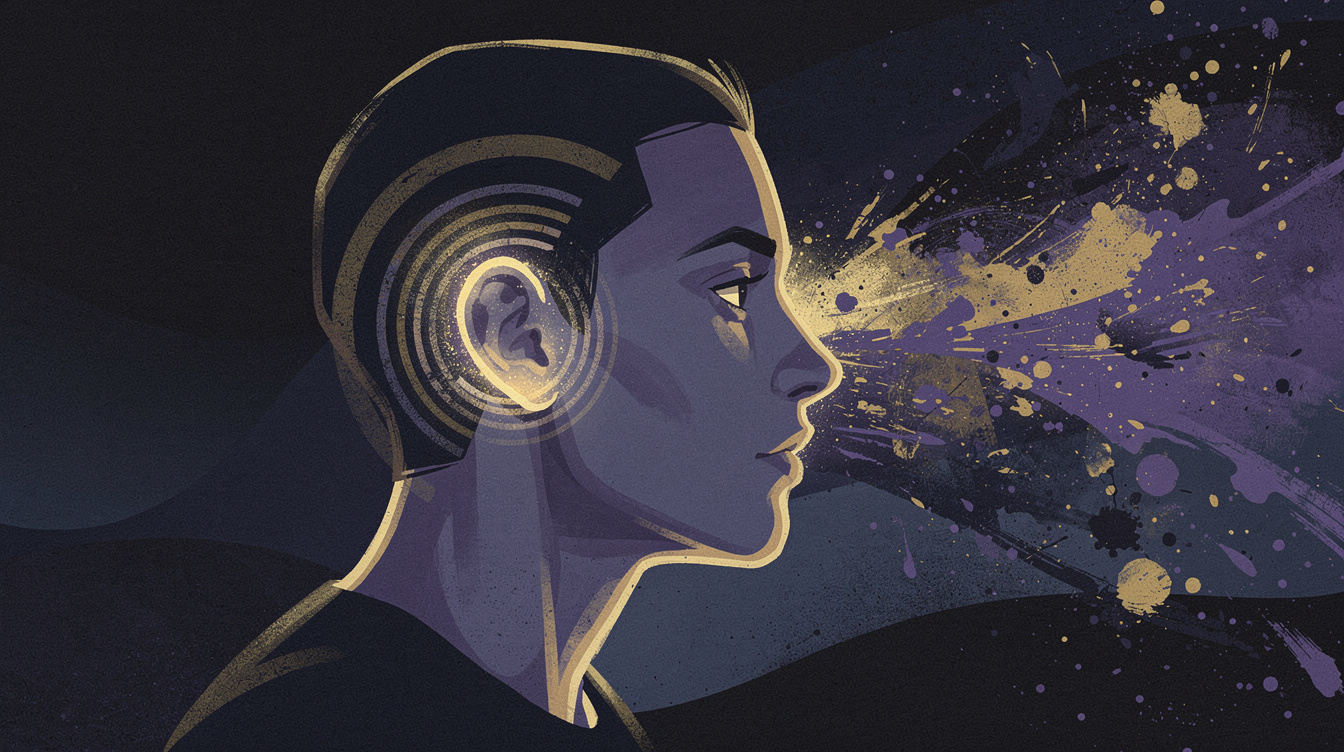
Something genuinely wondrous: take cultures that developed in total isolation from each other — different continents, different languages, no contact for thousands of years — and you'll still find striking commonalities in their music. Certain things about music seem to be wired into humans, not learned. Other things are completely cultural. Untangling which is which is one of the most fascinating questions in music, and it has real lessons for what you make.
The things that show up everywhere
Despite enormous diversity, some musical features appear across virtually all human cultures — strong evidence that they're rooted in our biology and perception, not just tradition:
The octave. Nearly every musical culture on Earth, independently, treats notes an octave apart (one being double the frequency of the other) as the "same" note. This isn't a Western invention — it's a near-universal, almost certainly because of how our ears and brains physically process frequency. The octave is about as close to a musical law of nature as exists.
Rhythm and the steady beat. All cultures have rhythm, and humans everywhere have the urge to move to a beat and synchronize to it. The impulse to nod, tap, or dance to a pulse appears to be deeply human — even babies respond to rhythm before they can walk.
Lullabies sound like lullabies. This one is striking: researchers have found that people can listen to a song from a totally foreign culture and reliably identify a lullaby as a lullaby — even with no idea what the words mean. Soothing, child-calming music shares qualities across cultures. The same goes, to a degree, for dance music and healing songs. The function shapes the sound in recognizable ways everywhere.
Music for emotion and bonding. Every known culture uses music — for ritual, celebration, grief, connection. No human society has ever been found without music. It's a human universal, like language.
The things that are learned
Just as fascinating is what isn't universal — what's purely cultural:
- Which scales sound "right." The major/minor system we treat as natural is a Western convention. Other cultures use entirely different scales, including notes that fall "between" our piano keys (microtones) and sound perfectly correct to ears raised on them.
- What sounds "in tune" or "out of tune." This is largely learned. Music that sounds dissonant or strange to one culture sounds beautiful and normal to another.
- The emotional meaning of specific sounds. Even "minor = sad" isn't fully universal — it's strong in Western-influenced music but not an absolute law everywhere.
So a huge amount of what feels like the "natural" way music works is actually you, specifically, having absorbed your culture's musical language since birth — the same way you absorbed your native tongue without studying it.
Why this matters for your music
This isn't just trivia. It's useful:
1. Some things are safe bets everywhere. Lean on the universals — a strong, clear rhythm; the octave and consonant intervals; music that serves a clear emotional function — and you're working with the deepest, most reliable wiring humans have. These connect across any audience.
2. The "rules" you can break are the learned ones. Since the major/minor system and "in-tune" conventions are cultural, they're exactly the things you can bend for fresh, surprising effects — microtones, unusual scales, modes, sounds from other traditions. You're not breaking laws of nature; you're stepping outside one musical language into another.
3. Cross-cultural borrowing is a creativity goldmine. Some of the most exciting modern music comes from blending musical languages — Western production with non-Western scales, rhythms, and instruments. There's a whole world of valid musical systems your audience hasn't heard combined with yours. (Do it with respect and genuine appreciation, not as a costume.)
The wonder of it
Step back and marvel for a second: music is one of the only things that is both deeply universal (every human culture has it, built on shared wiring) and infinitely varied (every culture made it differently). It's a universal language with countless dialects — and you get to speak it, drawing on the parts that connect across all of humanity and the parts that make your particular voice unique.
Tap the universals to connect. Bend the learned conventions to surprise. That combination — what's hardwired plus what's chosen — is where the most resonant music lives.
Ready to try it yourself?
Onomo is a creative suite in your browser — a full DAW, a design editor, a video editor and a writing room. Free to start, nothing to install.
On your phone? Make your account now and open Studio later on a laptop, Chromebook or tablet. The free Toolkit works right here.
Tap into something universal in the Studio